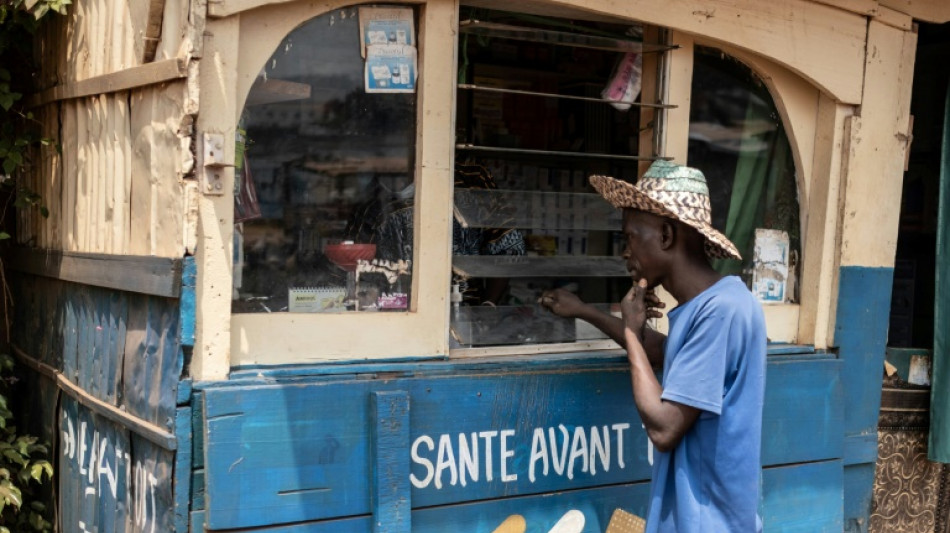
In C.Africa, informal pharmacies provide a health safety net of sorts / Photo: Barbara DEBOUT - AFP

 Lula, Bolsonaro strike calmer tone in final Brazil election debate

 'How is it possible?': Students protest Indonesian haze
 Israel launches major West Bank operation after soldiers killed

 Typhoon Champi knocks out power to thousands in Taiwan
 As Israeli election nears, campaign turns ugly

 Oscar hopeful 'La Bola Negra' offers lessons about communicating, directors say

 Trapped: Soaring fuel costs hurt Maine lobster industry before midterms
 Marc Marquez beats brother Alex to Australian MotoGP pole
 Ebola vaccine trial begins in DR Congo

 Travelling man Wade equals Prem try record

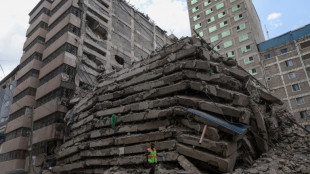 Rescuers search for seven people in Nairobi building collapse

 Sacha Baron Cohen revives the 'problematic dinosaur' Ali G in new film

 New race in Barcelona tops 17-event '27 IndyCar season
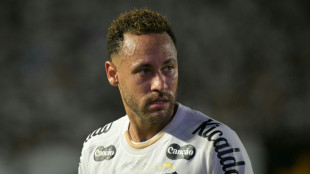 Neymar backs Flavio Bolsonaro in Brazil election
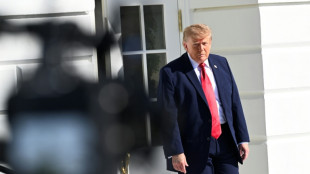
 Melania Trump says she brokered truce in war-torn Ukrainian city
 Leclerc tops times for Ferrari in opening practice for US Grand Prix

 Bayern Munich coach Kompany in hospital after collapsing
 Signs point to renewed major US military ops against Iran

 European, Mideast foreign ministers push peace and diplomacy at Istanbul talks

 Ex-All Black centre Williams undergoes 'miracle' heart surgery
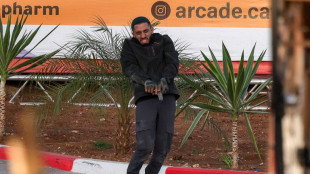 Netanyahu launches major West Bank operation after Israeli soldiers killed
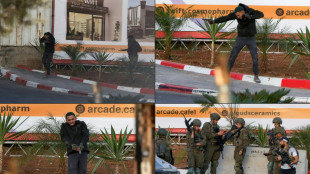 AFP photographer captures striking images from West Bank attack

 Oil hits $116 with stocks mixed on earnings, AI

 De Zerbi says Tottenham's dire record at Chelsea 'more motivation'
 Lula, Bolsonaro in final debate showdown before Brazil vote
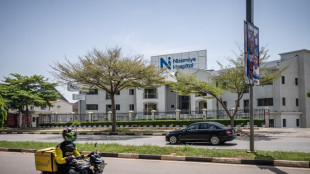
Yaguina Nesly waits outside a hut whose walls of corrugated steel are daubed in green and white paint.
It is one of a large number of unlicensed pharmacies in Bangui, the capital of the Central African Republic (CAR) -- outlets for cheap medication for the city's many poor.
Informal pharmacists, known as "doctas," flourish here, despite worries that they dispense counterfeit drugs, offer flawed medical advice and foster antibiotic resistance.
"I always buy my drugs here, because in hospital you can only get an appointment if you're lucky," says Nesly, 23, her nine-month-old baby swathed on her back.
"I prefer to come to my neighbourhood docta. It's faster and cheaper."
Inside the makeshift structure, Stephen Liosso-Pivara-Bembe, 33, hands her pills for stomach pains.
Wearing a white coat and with a stethoscope slung around his neck, Liosso-Pivara-Bembe says he started medical school but never finished because he ran out of money.
He works seven days per week in the store, which is decorated with pictures of yellow pills and a sign in white letters reading: "Health First."
People from wealthier economies may sneer or be shocked that illicit pharmacies openly trade like this.
But in the impoverished CAR, doctas are widely appreciated for providing a rough-and-ready safety net for health.
The landlocked country is struggling with a decade-long civil conflict, and ranks the second poorest country in the world in the UN's 189-nation Human Development Index.
It has just 0.1 doctors per 1,000 people -- 30 or 40 times fewer than countries in Western Europe, according to World Bank statistics.
Around 70 percent of medical care is provided by humanitarian organisations -- 2.7 million people, or around half the population, are in need of health assistance, according to the UN's Office for the Coordination of Humanitarian Affairs (OCHA).
- Queues -
There are no official figures for the number of doctas, but as an anecdotal guide, AFP counted 10 of the illegal pharmacies just in one major street in a rundown district.
Here, long lines of people form, especially in the evening.
In Bangui's fifth district, Antoine Bissa, a 39-year-old student nurse, was hard at work in a store named Biba Pharma.
He said he treated around 100 people per day "for injections and drugs," working until 11 pm. He said the business was the sole source of revenue to support his four children.
Most of his clients come with symptoms of malaria or a fever or need anti-parasite treatment or first aid, Bissa said.
He said he offered free consultation and cheaper drugs compared with conventional outlets.
But "if they are seriously ill, we tell them to go to hospital for extensive treatment," Bissa said.
Among the customers waiting for a docta was Gilles Doui, a 35-year-old civil servant, who had muscular pains.
"I've three children, and I don't earn enough to go to a (regular) pharmacy," he said. "I prefer to buy just a few pills rather than shell out for the whole package."
Liosso-Pivara-Bembe said: "We sell drugs in line with what people can afford."
Purchasing drugs in neighbouring Cameroon and Congo, but also in France, meant that he could keep costs down, he said.
"For example, a box of Vogalene (an anti-nausea medication) costs 7,000 CFA francs ($11), but you can get it here for 5,000," he said.
- Worried regulators -
The CAR's pharmaceutical regulators are struggling against a phenomenon that, for all its faults, meets a desperate social need.
"We don't work with the mini-pharmacies," said Romuald Ouefio, head of the department of pharmaceutics and traditional medicine at the health ministry.
"They are in the informal sector and encourage the spread of drugs of poorer quality, or counterfeit ones," he said.
There have already been cases of antibiotic resistance through the incorrect use of drugs.
"In a few months' time, we are going to have a meeting with owners so that they are prepared for switching to other lines of work," he said, describing this as a prior step before a "very firm crackdown."
Jules Dawili, who runs a medical lab in Bangui, agreed that antibiotic resistance had become a concern because of misuse of drugs or over-the-counter sales.
He pointed especially to amoxicillin, used for treating bacterial infections, and doxycycline, for preventive treatment of malaria.
Even so, Dawili said, he did not feel "100 percent" supportive of the crackdown.
"Some of them (the unlicensed pharmacists) are competent," he said. "The government could select these ones, give them training and make them pass tests so that they can help health professionals."
"If the government closes the mini-pharmacies, it will be doing nothing for people who can't afford" drugs in registered outlets, said Nesly, the young mother. "A lot of people are going to die."
V.AbuAwwad--SF-PST