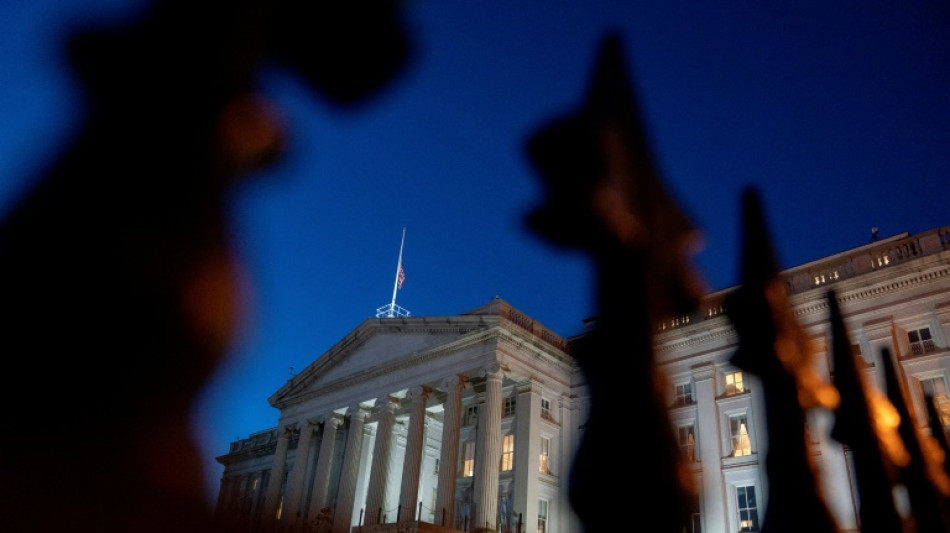
US government seeks to avoid 'bailout' label amid banking turmoil / Photo: Stefani Reynolds - AFP/File

 Alexander Skarsgard and his viral 'Wicker' transformation

 Thousands protest in Turkey over journalists' arrests, media shutdowns
 Man City beaten by Aston Villa to end perfect Premier League start

 Luis Enrique says PSG unbothered by Lyon match switch

 US gymnast Richard wins floor exercise gold at worlds

 Moltzan upstages Shiffrin to win season-opening World Cup giant slalom
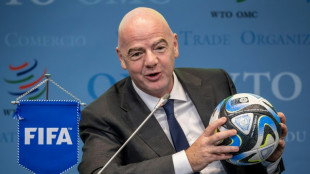 Infantino says backed by 'vast majority' in bid for re-election

 Police fire tear gas as new French protests kick off

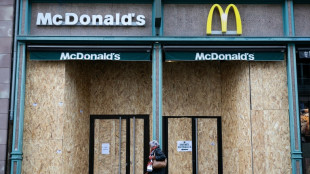 Police fire tear gas as new French demonstrations kick off

 Tropical Storm Champi nears China after battering Taiwan, Japan

 'Weeks, not days' in Kompany recovery, say Bayern

 Unfair to compare us to Barca: Real Madrid's Mourinho
 North Korea's Kim makes unannounced visit to Chinese border city

 Fire breaks out at Hitler's mountain retreat, suspect arrested
 Marc Marquez wins Australian sprint as Martin crashes out

 North Korea's Kim calls for training world's 'strongest' military

 Brewers edge Rays to capture World Series opener

 France to deploy 70,000 police for fresh weekend protests

 Tatum delivers as Celtics down winless Knicks

 Romantasy fans ready for sleepless night as 'Court of Thorns and Roses' returns
 De Goede hat-trick as Canada defeat England again

 Rubio urges Cubans to work with CIA, but warns: be discreet

 Leclerc tops times for Ferrari in practice for US Grand Prix

 Lula, Bolsonaro lock horns in final debate before Brazil vote
 Poulter and Hatton leave LIV Golf
US authorities may have taken extraordinary steps in recent weeks to assure depositors of failed lenders Silicon Valley Bank and Signature Bank, but they are avoiding parallels with bailouts of the 2008 crisis -- which have been criticized.
Days after SVB's collapse this month, the Treasury Department, Federal Reserve and Federal Deposit Insurance Corporation (FDIC) announced that its depositors -- along with those of Signature Bank -- would have access to their money.
But officials were quick to add: "No losses will be borne by the taxpayer."
In the 2008 financial crisis, authorities spared shareholders and bondholders while propping up institutions, said David Smith, professor of commerce at the University of Virginia.
The way the 2008 crisis was managed had provoked criticism, given rise to the Occupy Wall Street movement, and fuelled resentment towards banks.
But "there's no bailout" this time in the sense that officials are protecting depositors rather than shareholders and bondholders, Smith said.
Between the fall of 2008 and late 2009, the US Treasury injected more than $200 billion to recapitalize US banks, without any compensation. It has since recovered more than it invested.
In contrast, the intervention in SVB and Signature Bank this time wiped out the entire market value of the two institutions, led to the dismissal of their executives and is expected to result in significant losses for holders of debt issued by the two banks.
The Justice Department has opened an investigation into SVB's collapse, according to media reports, while President Joe Biden told Congress that it should "act to impose tougher penalties for senior bank executives whose mismanagement contributed to their institutions failing."
- Who will foot the bill? -
While some believe it is wrong to call the government's moves a bailout, Aaron Klein of the Brookings Institution believes that it is one.
"Uninsured depositors like (entrepreneur) Peter Thiel and cryptocurrencies were made whole by the government," when they would otherwise have lost parts of their deposits, Klein said.
Authorities have said the FDIC will use resources from the Deposit Insurance Fund to ensure that depositors are made whole, and this is funded in part by fees assessed on financial institutions.
At the end of 2022, the fund had a balance of $128 billion, or 1.27 per cent of the $10 trillion in insured deposits.
"Depending on how much the FDIC has to drain their deposit insurance reserve to cover depositors now," they might have to charge banks higher fees to replenish that reserve, said David Smith.
"Clearly consumers ultimately will bear the cost, because that has to get passed on somehow," he said.
In an opinion piece for the Daily Mail, former vice president Mike Pence called it "disingenuous" to say that costs will not be borne by taxpayers.
"Every American with a bank account will pay higher fees to replenish the billions spent by the FDIC to backstop failing banks," he wrote.
Republican White House contender Nikki Haley added: "Now depositors at healthy banks are forced to subsidize Silicon Valley Bank's mismanagement."
In the short-term, the government's efforts helped prevent "contagion," said Mark Williams, lecturer at Boston University.
But a longer-term cost is that "moral hazard has been increased," he added.
"How will that impact... bank behavior going forward?" he asked.
W.Mansour--SF-PST