-
 Obama blasts Trump's 'chaos and cruelty' while campaigning for Democrats
-
Jorge Martin out of Australian MotoGP with fracture: team

-
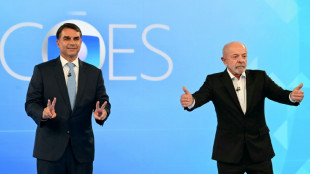
 Bolsonaro leads Lula in final Brazil election polls
-
Antonelli storms to US Grand Prix pole on weekend he can take title

-
 Antonelli storms to pole for US Grand Prix
-
Apologetic Alvarez fires Atletico to win against Deportivo

-
 Alvarez fires Atletico to win against Deportivo
-
Lens beat PFC in Ligue 1 matchday impacted by social unrest

-
 Japan's Nakai wins Grand Prix de France for second straight year
-
Valkyries hit back against Dream to level WNBA Finals

-
 Ronaldinho to make comeback in Italian third tier
-
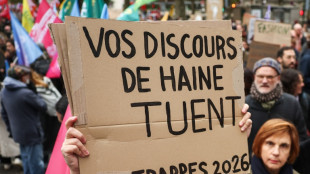
'Fighting for our rights': Paris protesters determined to march on
-
 Israeli forces displace Hebron families after deadly attack
-
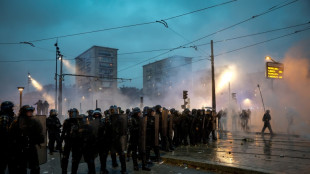
Clashes break out in Paris, other French cities amid fresh protests

-
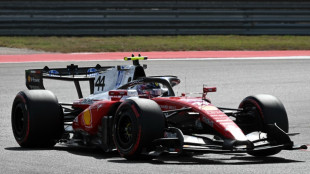 Hamilton on top with Antonelli fourth in final practice at US Grand Prix
-
Spurs seal rare win at Chelsea as Palmer sees red

-
 Beier late show sends Dortmund top of Bundesliga
-
Nearly 1,000 arrested in French protests marred by 'elevated' violence: minister

-
 Police and protesters clash again at Albanian anti-government rally
-
France extends detention of suspected racist shooter
-
 Arteta hails mentality as Arsenal go level with Man City
-
Andrade and Nemour star as Biles cheers at world gymnastics champs

-
 Clashes break out in Paris, other cities amid fresh protests
-
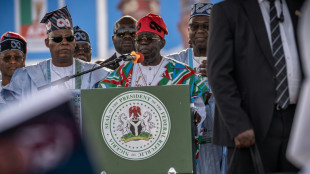
Nigeria's Tinubu defends record as economy bites ahead of election
-
 Bouthier kicks Vannes to first Top 14 win of season
-
'Guiding star' Fuellkrug bags Bremen brace, Leipzig win

-
 Thousands rally for Lula and Bolsonaro on eve of tight Brazil vote
-
Man City's perfect start ended by Aston Villa, Arsenal go joint-top

-
 Red-hot Fuellkrug bags Bremen brace, Leipzig win
-
Arsenal sink Everton to join Man City at Premier League summit

-
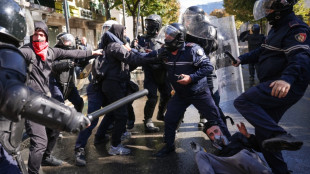 Thousands gather at new Albanian anti-government rally
-
France protests: Latest developments

-
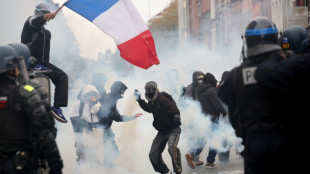 French police fire tear gas during fresh protests
-
French ice dancers Cizeron and Fournier make golden start to season

-
 Suspect detained after fire wrecks Hitler's mountain retreat
-
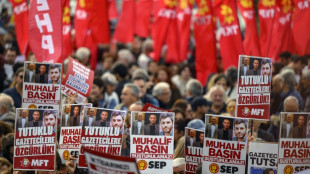
Thousands protest crackdown on media in Turkey
-
 Alexander Skarsgard and his viral 'Wicker' transformation
-
Brazil's Andrade returns to take vault gold at worlds

-
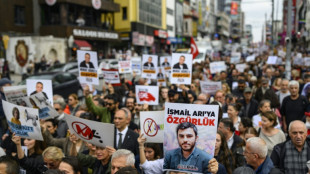 Thousands protest in Turkey over journalists' arrests, media shutdowns
-
Lula, Bolsonaro hold final rallies ahead of Brazil election
-
 Man City beaten by Aston Villa to end perfect Premier League start
-
Ukraine has 'stable connection' to Starlink: govt

-
 Luis Enrique says PSG unbothered by Lyon match switch
-
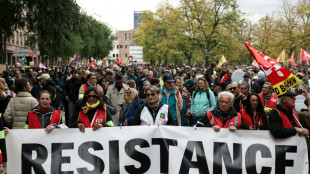
French protests kick off amid heavy security blanket
-
 US gymnast Richard wins floor exercise gold at worlds
-
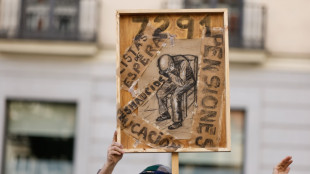
250,000 rally in Madrid demanding state pension guarantees
-
 Moltzan upstages Shiffrin to win season-opening World Cup giant slalom
-
UK police says 'claims' over Meghan Markle's dad not sent to other law enforcement

-
 Infantino says backed by 'vast majority' in bid for re-election
-
Top-ranked Rybakina to face Fernandez for Ningbo title

Far-reaching UN treaty a must to cut global plastic use: experts
Only a bold and ambitious UN treaty with sweeping reforms of the entire plastic life cycle can stem the world's waste crisis, experts said Monday.
Even if measures thought to have the greatest potential for reducing plastic consumption are implemented, they would still fail to prevent a substantial rise in plastics production and use, they warned in a report.
A year ago 175 nations agreed to end plastic pollution by crafting a binding UN treaty, which could come into being as soon as the end of 2024.
Among the key actions under negotiation are a global ban on single-use plastic items, a "polluter pays" scheme, and a tax on new plastic production.
But even with these policies there is a "considerable" possibility the treaty "will be too weak to bend the consumption curve downward", the authors said in a statement.
On current trends, plastic use will nearly double from 2019 across G20 countries by 2050, reaching 451 million tonnes each year, according to the report, jointly produced by Economist Impact and The Nippon Foundation.
In 1950, only two million tonnes of plastic were produced worldwide.
"The findings highlight the level of ambition and the sense of urgency needed at the negotiation table," co-author Gillian Parker told AFP.
- 'Not an impossible problem' -
The report modelled the three policy approaches -- all under discussion at the UN talks -- covering the entire life cycle of plastic, from production to disposal.
A global ban on unnecessary single-use plastics, including plastic sachets, cotton buds and balloon sticks, would by 2050 slow the growth in plastics consumption by only 14 percent.
So-called extended producer responsibility schemes, which put the onus on industry, would barely dent the projected increase in plastic use, reducing it from 451 to 433 million tonnes.
And even a substantial tax on "virgin" plastic resin, the raw material for making plastics, would only shave 10 percent off the baseline projection out to 2050.
Combined implementation of all three measures would still allow plastic consumption to grow by a quarter.
Even these inadequate measures face stiff headwinds: producers, retailers, industry bodies and consumer groups are likely to oppose some or all of them, according to the report.
"Industry has been very clear in saying they do not think taxes are productive," said Parker. Manufacturers are even less enthusiastic about production cuts.
Recycling, the report showed, has not lived up to expectations, even if it remains part of the solution. It's like "closing the door after the horses bolted", said Parker.
It is more efficient to intervene at the beginning of the plastics pipeline than at the end, when we're throwing everything away, she suggested.
Many countries lack the infrastructure to handle the scale of plastic waste generated and it remains cheaper to produce virgin plastic than recycle it.
Parker and her team, however, are still optimistic. "This is not an impossible problem," she told AFP.
With the right binding and enforceable interventions and economic incentives, plastic pollution is "solvable", she said.
A.Suleiman--SF-PST