SWIFT, the global finance arm that the West can twist

 Lebanon reports 11 dead in strikes that Israel says targeted Hezbollah

 Crystal Palace sign Israel winger Khalaili
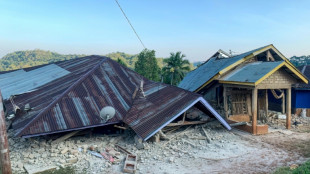
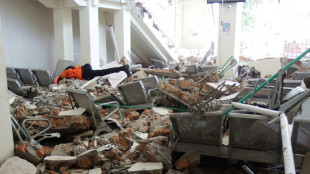 Rescuers search for survivors as Indonesian quake death toll rises to 47

 Taliban govt supporters dance, take selfies in Kabul celebrations

 UK PM urges 'reflection' after Cambridge professor's death

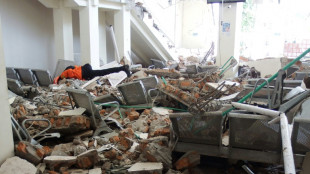 Rescuers search for survivors as Indonesian quake death toll rises to 40

 Earthquake rocks Spain's tourist jewel Granada
 Perez, Fiorini set world records in winning Euro race walk golds

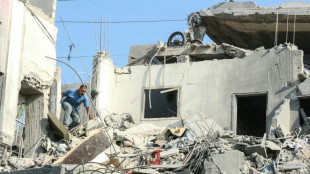 Lebanon says 9 dead in strikes as Israel says targeted Hezbollah

 World Cup winner Ferran Torres signs for Paris Saint-Germain

 Disney reveals 'X-Men' cast, slate of sequels at D23 fan event
 Star Cameroon goalkeeper Bihina faces Malawi's prolific Chawinga sisters in WAFCON final

 Mehidy claims Smith to keep Bangladesh on top in Australia Test
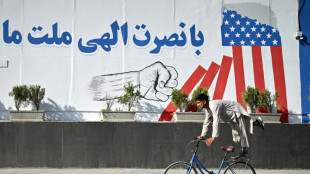
 Iran fires back at Trump's threat to declare Hormuz a US territory
 No monkey business: India 'whisperers' guard world championships

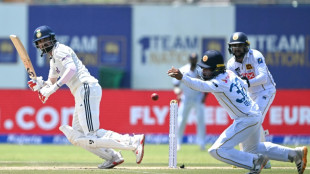
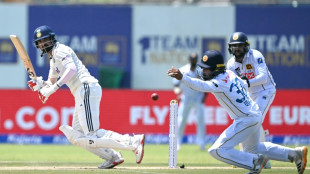
 Steady India 101-1 at lunch in first Sri Lanka Test

 Faced with historic drought, the Dutch rethink water management
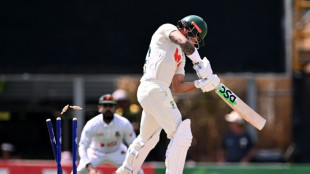
 Pallister holds off Ledecky to win Pan Pacs 400m free title
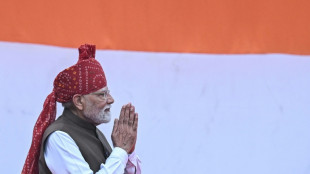 India's Modi woos youth with free coaching, AI training
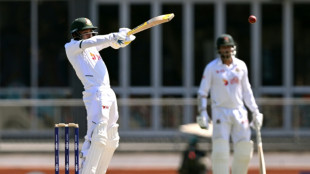
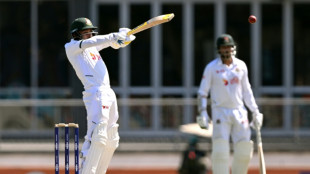 Mehidy half-century steers Bangladesh to big lead in Australia Test

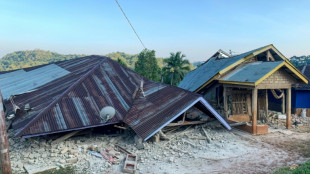 Powerful quake off Indonesia sparks mass evacuations

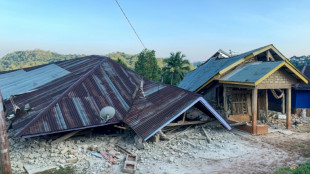 Poweful quake off Indonesia sparks mass evacuations
 LA Olympics has to allow politicians on the bus, just not behind the wheel - Coe

 No.1 Scheffler fires sizzling 61 to seize PGA St. Jude lead

 Venezuela frees more political prisoners amid post-Maduro talks
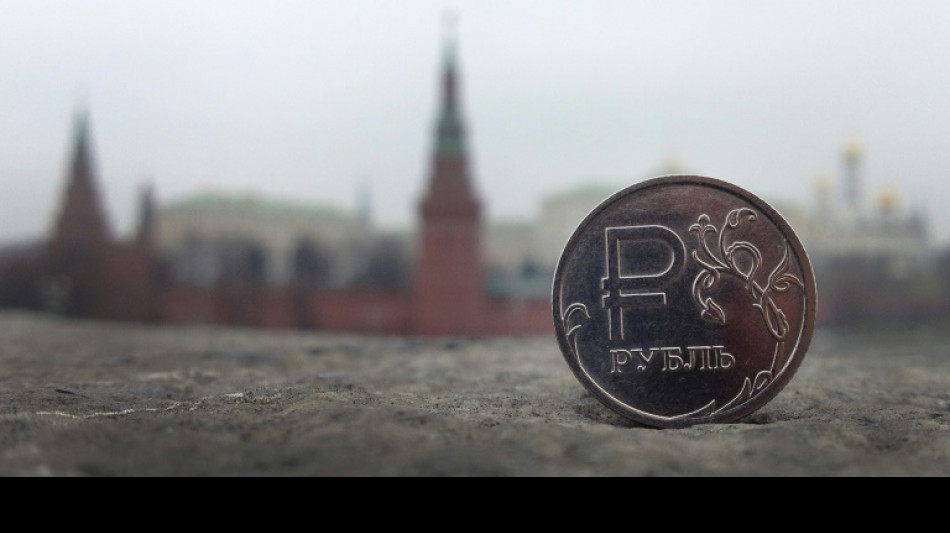
An exclusion from SWIFT, a very discreet but important cog in the machinery of international finance, is one of the most disruptive of the possible sanctions that the West could deploy against Russia for its invasion of Ukraine.
Ukrainian President Volodymyr Zelensky called Thursday for such a move after Russian forces invaded his country, as Western powers consider imposing additional sanctions on Moscow.
The White House has pointedly refused in recent weeks to exclude the possibility of barring Russia from the international system that banks use to transfer money, a move that would cripple Russia's ability to trade with most of the world.
European leaders were expected to discuss the measure at their emergency summit later Thursday as one possible option. An EU official briefing journalists suggested the measure would most likely be held in reserve for a future round of sanctions, should the EU need to escalate its punishment.
What is SWIFT?
Founded in 1973, the Society for Worldwide Interbank Financial Telecommunication, or SWIFT, actually doesn't handle any transfers of funds itself.
But its messaging system, developed in the 1970s to replace relying upon Telex machines, provides banks the means to communicate rapidly, securely and inexpensively.
The non-listed, Belgium-based firm is actually a cooperative of banks and proclaims to remain neutral.
What does SWIFT do?
Banks use the SWIFT system to send standardised messages about transfers of sums between themselves, transfers of sums for clients, and buy and sell orders for assets.
More than 11,000 financial institutions in over 200 countries use SWIFT, making it the backbone of the international financial transfer system.
But its preeminent role in finance has also meant that the firm has had to cooperate with authorities to prevent the financing of terrorism.
Who represents SWIFT in Russia?
According to the national association Rosswift, Russia is the second-largest country following the United States in terms of the number of users, with some 300 Russian financial institutions belonging to the system.
More than half of Russia's financial institutions are members of SWIFT, it added.
Russia does have its own domestic financial infrastructure, including the SPFS system for bank transfers and the Mir system for card payments, similar to the Visa and Mastercard systems.
Are there precedents for excluding countries?
In November 2019, SWIFT "suspended" access to its network by certain Iranian banks.
The move followed the imposition of sanctions on Iran by the United States and threats by then Treasury Secretary Steven Mnuchin that SWIFT would be targeted by US sanctions if it didn't comply.
Iran had already been disconnected from the SWIFT network from 2012 to 2016.
Is it a credible threat?
Tactically, "the advantages and disadvantages are debatable," Guntram Wolff, director of the Brussels-based Bruegel think tank, told AFP.
In practical terms, being removed from SWIFT means Russian banks can't use it to make or receive payments with foreign financial institutions for trade transactions.
"Operationally it would be a real headache," said Wolff, especially for European countries which have considerable trade with Russia, which is their single biggest supplier of natural gas.
Western nations threatened to exclude Russia from SWIFT in 2014 following its annexation of Crimea.
But excluding such a major country -- Russia is also a major oil exporter -- could spur Moscow to accelerate the development of an alternative transfer system, with China for example.
O.Salim--SF-PST