Gold mines, trash and memories: Soweto's urban hikes / Photo: GUILLEM SARTORIO - AFP

 UK PM calls for 'honest discussion' about EU free movement

 Far-right leader Le Pen kicks off tilt at French presidency amid nationwide protests

 Naomi Osaka could quit tennis if daughter asks her to

 Last MotoGP race at Phillip Island cancelled due to weather in Marquez setback

 Sri Lanka seeks faster green energy shift after oil shocks
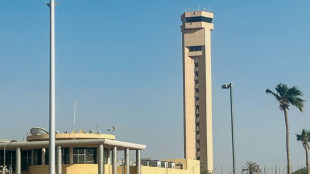 Riyadh airport resumes flights following Houthi attacks

 'Call of Duty' North Korea invasion edition tops sales charts in South
 Musk accuses Ukraine of violating Starlink's terms of service

 Fed expected to hold rates steady days ahead of US midterms

 More Lula, or back to the Bolsonaros? Brazil votes in cliffhanger

 Jorge Martin out of Australian MotoGP with fracture: team

 Antonelli storms to US Grand Prix pole on weekend he can take title

 Apologetic Alvarez fires Atletico to win against Deportivo

 Lens beat PFC in Ligue 1 matchday impacted by social unrest

 Valkyries hit back against Dream to level WNBA Finals

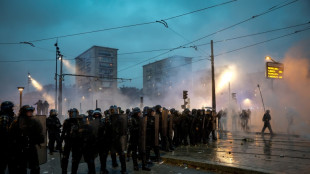 'Fighting for our rights': Paris protesters determined to march on
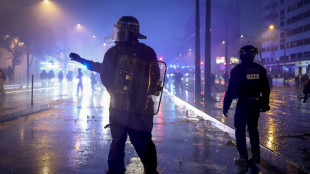 Clashes break out in Paris, other French cities amid fresh protests

 Spurs seal rare win at Chelsea as Palmer sees red

 Nearly 1,000 arrested in French protests marred by 'elevated' violence: minister

 France extends detention of suspected racist shooter

 Andrade and Nemour star as Biles cheers at world gymnastics champs

 Nigeria's Tinubu defends record as economy bites ahead of election

 'Guiding star' Fuellkrug bags Bremen brace, Leipzig win
 Man City's perfect start ended by Aston Villa, Arsenal go joint-top

 Arsenal sink Everton to join Man City at Premier League summit
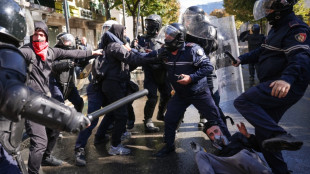
Soweto is full of gritty urban landscapes and alleys which evoke its history as one of apartheid's battlegrounds.
Yet there is also a gentler, folksier side to the vast Johannesburg township, and one that local entrepreneurs are portraying to curious tourists.
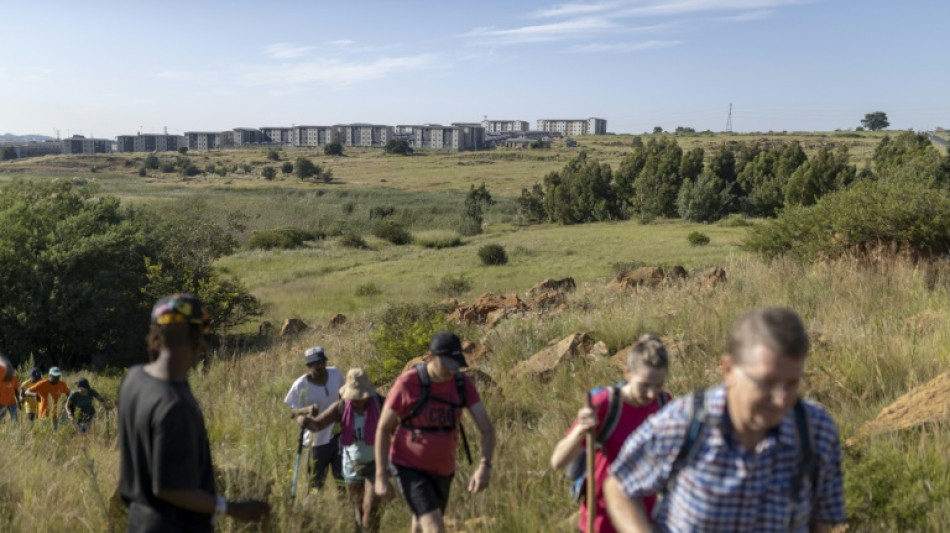
Every Sunday morning, Masike Lebele takes about 20 hikers for a walk in his childhood neighbourhood, opening their eyes to a vista where countryside, abandoned gold mines, trash and deep-rooted folk beliefs all co-exist.
"This was my playground," said Lebele, a wiry 40-year-old who wore a leopard-print shirt and a floppy hat.
"I was adventurous as a kid," he said, his eyes sharp and wearing a smile.
"We used to be little hunter-gatherers here," he said, pointing to a dam by an abandoned gold mine. "We learned to swim here."
The starting point for his walk is a "shebeen" -- a local tavern set up in a house that belonged to his grandmother.
A recent hike on the six-and-a-half-kilometre (four-mile) route began in the early morning.
For safety, a dozen friends accompanied the group.
Walkers crossed a street littered with rubbish and old tyres, where fresh fruit and snacks vendors had set up their stalls.
"This is where Soweto starts," said Lufuno Matidza, the elegant partner of the guide, wearing futuristic glasses, large earrings and bright pink lipstick.
In the distance rose the silhouette of Johannesburg's skyscrapers -- another world.
A wasteland dotted with reeds descended towards a stream.
"Sangomas" -- a Zulu word for traditional healers -- "consider this first portion a holy land," said Masike, asking hikers to speak softly.
- 'Untold stories of Soweto' -
A naked man sat quietly in the stream and six others in robes sang melodies. A little further on, three women wrapped in shawls had lit coloured candles, which melted on a rock.
The silence was broken by a cry. "What's that?" an anxious walker asked.
"It's a person roaring, reaching out to the ancestors," Matidza answered laconically, without breaking her stride.
The walk wove its way through a mountain of gold-coloured mine tailings, sometimes streaked with a chemical blue colour.
More than a century of plundering the earth for gold has left a strange but compelling legacy in Soweto.
Pollution from mine dumps is common, and erosion has created unstable galleries of compacted sand, spectacular but crumbly.
"Gold is always here," said Lebele, who said he was deeply attached to the seemingly desolate landscape.
At the exit of the ochre galleries was a plateau of yellow sand.
"This is where we became kung fu masters. Each group we came across we fought," the tattooed Lebele recalled.
The heights of the dumped spoil give a spectacular view of Soweto, divided by streets into grids of small homes.
"This is our home," said Matidza.
As the cradle of apartheid, Soweto supports a flourishing tourism industry, boasting tours of museums, shebeens and a street where two Nobel winners -- Nelson Mandela and Desmond Tutu -- used to live.
But nearly 30 years after the advent of democracy, the township is plagued by ills, ranging from poverty and unemployment to substance abuse and crime.
Christo Welgemoed, 62, who lives just 11 kilometres (six miles) from Soweto, said the hike was horizon-broadening.
"Had I not heard of this hike on a local post, I would never have come here," he told AFP.
"We usually go into nature, streams, mountains and so forth, (but) this is more of a cultural experience than normal."
Noreen Wahome, 29, a Kenyan living in Johannesburg, said she came on the walk out of her love for the "untold stories of Soweto".
Lebele said his Soweto Ndofaya Hike was booked for weeks ahead.
"People just think that mine dumps are a place of danger but... these are places of fun and exploring," he said.
H.Darwish--SF-PST