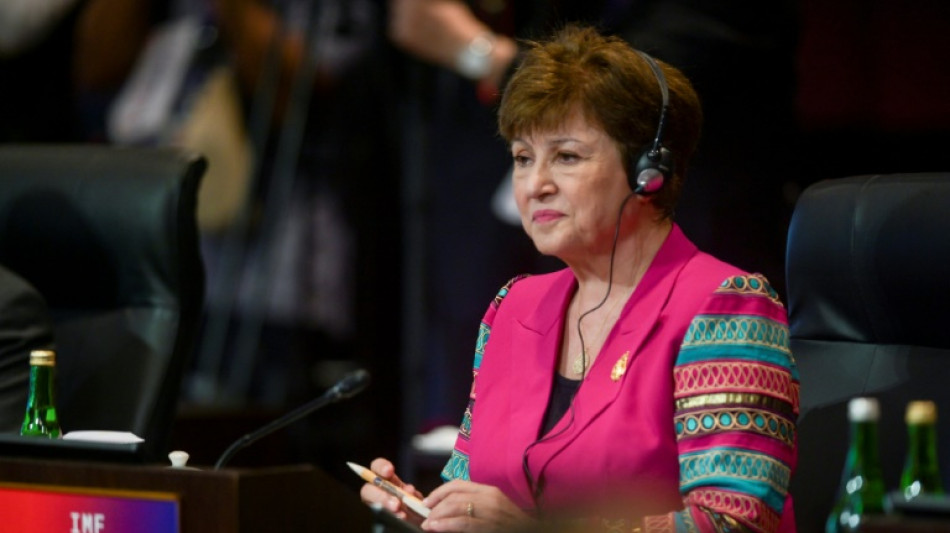
Full brunt of financial tightening yet to materialize: IMF / Photo: BAY ISMOYO - POOL/AFP/File

 Monaco hold Lille as both move to top of Ligue 1

 Isak extends hot streak as Liverpool sink Brighton

 Brazil chooses between Lula and Bolsonaro in nail-biter vote

 Doha opens ninth World Investment Forum focused on future investment

 Kuwait public works minister and UK ambassador discuss closer cooperation

 Historic Ramallah olive press joins modern production with local tradition

 Hebron operation forces 373 Palestinian families from their homes

 Chicago Fire rally past Atlanta United 3-2 to hold fourth place

 Credit-card shortcuts can turn impulse spending into lasting debt

 Insurance deductibles and no-claim bonuses require a careful claims decision

 Poland’s WB Group plans $100 million India investment for drone production

 John Catlin wins Hong Kong Open and secures first Masters invitation

 KIB Group nine-month profit rises 30% to KD 26.6 million

 شركات عائلية من دبي تدرس تجارب هونغ كونغ في الحوكمة وانتقال الثروة

 تحالف إماراتي أفريقي يدرس مشاريع الطاقة والتعدين والبنية التحتية

 كأس الإمارات للناشئين يعزز مسار اكتشاف مواهب الغولف

 نازحو مخيم الإسراء في غزة يواجهون نقص الغذاء وتراجع المساعدات

 فيديو انتخابي لبن غفير من سجن عوفر يثير انتقادات

 هيئة حقوقية تحذر من تهجير وهدم واسع في الخليل

 الأمير علي ينتقد دعم الاتحاد الآسيوي لإنفانتينو ويطالب بالشفافية

 أربع ملفات قد تتغير إذا سيطر الديمقراطيون على الكونغرس الأميركي

 حرية التنقل تعيد ملف علاقة بريطانيا بالاتحاد الأوروبي إلى الواجهة

 Pinheiro Braathen wins Soelden giant slalom
 Man Utd's Fernandes dropped by Carrick after Como outburst

 التفكجي: قيود الترخيص والهدم تضغط على الوجود الفلسطيني في القدس

Countries have yet to see the full impact of tightening financial conditions, IMF chief Kristalina Georgieva said Thursday, warning that central banks have some way to go in their inflation battle.
Global growth is expected to slow further this year, as central banks including the US Federal Reserve have raised interest rates to cool surging prices.
While sectors like housing have been reeling in the United States for example, the labor market remains strong with low joblessness.
"As long as people are employed, even if prices are high, consumers spend.... But we all know that the impact of tightening financial conditions is yet to bite, in terms of unemployment," Georgieva told reporters in a briefing on the world economy.
"Inflation remains stubborn, and in that sense, the job of central banks is not yet done," she said.
This suggests central banks may need to continue hiking interest rates, walking a fine line between easing demand and avoiding tipping economies into recession.
Doing so comes with risks, and Georgieva stressed the need to watch how tightening conditions hit the labor market and possibly translate into "more tensions between employers and workers."
Governments have been quick to provide policy support thus far, adding a buffer between consumers and surging food and energy costs, but this policy space is "shrinking," she cautioned.
- Bottoming out -
The International Monetary Fund also expects the global slowdown to "bottom out" towards year-end, and for the world economy to trend towards a higher growth trajectory in 2024, Georgieva said.
The IMF maintains that a "global recession can be avoided" even if some countries see downturns.
But this is subject to an absence of negative shocks like growing social unrest and spillovers between countries, climate events, or a worsening in Russia's invasion of Ukraine.
"We are now in a more shock-prone world," she said.
While tighter financial conditions will have a "dramatic" impact on countries with high debt levels, Georgieva said the IMF does not see a "systemic debt crisis on the horizon."
She added that a new global sovereign debt roundtable is set to meet for the first time in February, on the sidelines of a Group of 20 finance officials meeting, bringing key creditors and private finance together.
- 'Stay the course' -
Weighing in on specific countries, Georgieva noted that China needs to "stay the course" in reopening from nearly three years of a strict zero-Covid policy that has battered business activity.
China's rebound from its latest surge in coronavirus cases since recently lifting lockdowns, quarantines and mass testing would have significant implications globally, she said.
The world's second biggest economy used to deliver up to 40 percent of world growth.
"What is most important is for China to stay the course, not to back off from that reopening," Georgieva said.
If so, it could turn into a "positive contributor" to average global growth by mid-year or thereabouts, she added.
Meanwhile, Georgieva expressed optimism over "remarkable" market resilience in the United states, with Covid-era support helping consumer demand in the world's biggest economy.
"It gives some... expectation that the US would avoid falling into a recession," she said, adding that a potential downturn will likely be very mild.
"For now, the dynamic seems to be more indicative for a soft landing," she said.
P.Tamimi--SF-PST