'Coca' pits indigenous Colombians against soft drink giant

 Street rallies held as Taliban govt marks five years ruling Afghanistan

 World Cup winner Ferran Torres signs for PSG from Barcelona

 Monsoon rains submerge villages, fields in Myanmar
 India's Padikkal, Rahul hit half-centuries in Sri Lanka Test

 UK-based Afghan writer pleads for country's 'abandoned' women

 Werro edges Hodgkinson in boost for world record-seeking 800m rivalry

 Mehidy claims Smith as Bangladesh sense historic upset in Australia
 Indonesia rescuers search for survivors as quake death toll rises to 38

 Japan coach Jones says team should not get despondent after heavy loss

 Flags, music as Taliban authorities mark five years ruling Afghanistan
 'Like we were on a trampoline': Indonesia quake kills 20, thousands flee
 Australia run riot to crush Japan 56-17 in Townsville

 Stolen Matisse works tied to infamous art thief in Brazil
 Hasan strikes twice for Bangladesh to reduce Australia to 51-2

 Powerful quake off Indonesia kills 20, sparks mass evacuations

 Mehidy half-century steers Bangladesh to 228-run lead in Australia Test

 Japan defence minister visits war shrine, PM stays away

 Viennese woman sues city over 'discriminatory' toilet fees

 Venezuelan amputees adjust to new life after quakes

 Venezuela frees 131 prisoners amid post-Maduro transition talks

 Arteta tells Arsenal fans not to fret over his future
 Mexico's Indigenous chief justice hits back at discrimination

 Werro wins 800m race for the ages, Warholm and Tamberi hit four

 Jimenez rescues dramatic Wolves draw in Championship opener
 Taliban govt to mark five years ruling Afghanistan
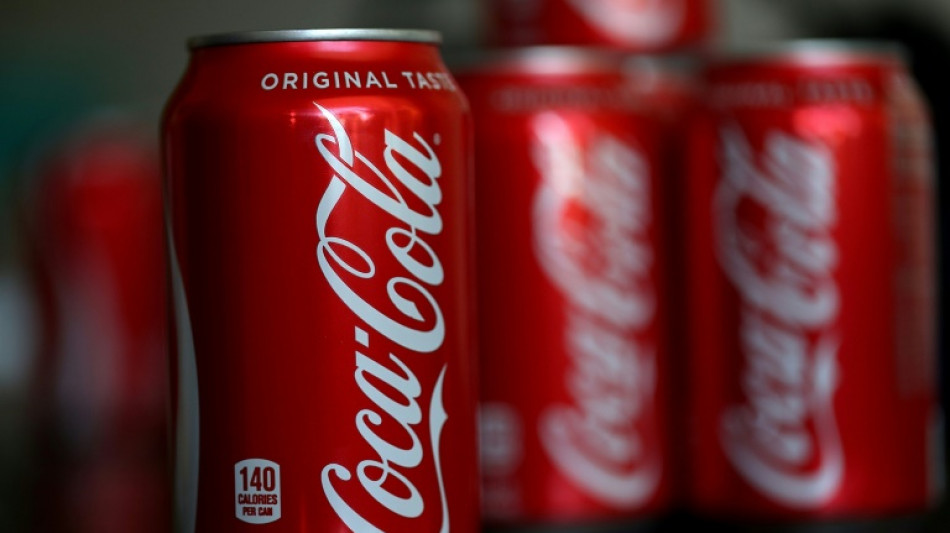
Indigenous Colombians are going head to head with the world's biggest soft drink company over the commercial use of the word "coca" -- the name of an indigenous South American plant.
Representatives of the Nasa and Embera Chami tribes are threatening to ban the sale of Coca-Cola in their territories after the Coca-Cola Company incurred their ire by taking issue with the name of a locally-produced beer, Coca Pola.
They sent a letter to the multinational corporation, a copy of which AFP has seen, giving it 10 days to explain its "non-consensual use" of the word "Coca" in Coca-Cola -- the world's most popular fizzy drink.
If the company fails to reply, the communities threatened "judicial and commercial measures" including "the prohibition of the sale of its products in indigenous territories."
These reserved territories, according to Colombia's National Land Agency, cover almost a third of the country, or 33 million hectares, though less than 10 percent of the population identifies as indigenous.
For centuries, indigenous peoples in Colombia, Peru and elsewhere on the continent have chewed the coca leaf and defended it as part of their cultural heritage.
The plant is also used in the production of cocaine, of which Colombia is the world's largest exporter and the United States its biggest consumer.
- 'Abusive' trademark -
Indigenous peoples in Colombia are allowed by law to grow the plant and market products manufactured from it.
One such product, Coca Pola, has been manufactured by local company Coca Nasa for four years. "Pola" means beer in Colombia.
Three months ago, Coca-Cola threatened legal action against Coca Nasa, which employs about 20 people and produces food, traditional medicine, drinks and other coca products.
Coca-Cola asked the company -- run by members of the indigenous Nasa community -- to "cease and desist permanently from using the name Coca Pola or any similar term that could be confused with the commercial brands" owned by the drinks giant.
In turn, the Nasa and Embera Chami now claim the more than 100-year-old Coca-Cola trademark, registered without consulting them, amounts to an "abusive practice" that violates "the national, Andean and international human rights systems."
Nasa leader Fabiola Pinacue, who signed the letter to Coca-Cola, defended her community's right to use the trademark Coca Pola.
"The coca leaf is a key element of the Nasa culture," insisted Pinacue.
Legal firm Brigard Castro, the legal representative for Coca-Cola in Colombia, did not reply to a request from AFP for comment.
David Curtidor, a lawyer representing Coca Nasa, pointed out that in 2012 a judge ruled in favor of an indigenous organization that sued a Colombian businessman for registering the brand "Indigenous Coca" without consulting the community.
After the ruling, the brand left the market.
I.Yassin--SF-PST