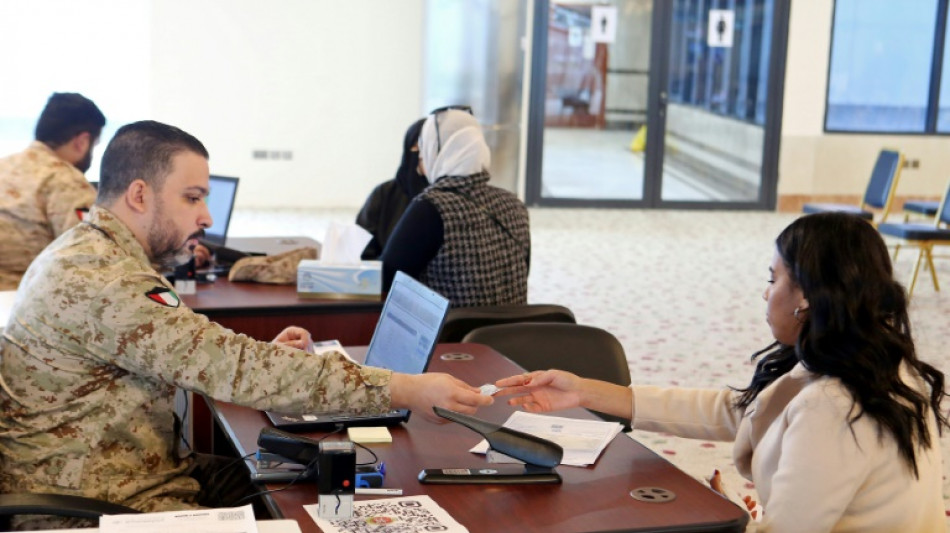
Kuwait army allows women in combat roles, but without guns

 Street rallies held as Taliban govt marks five years ruling Afghanistan

 World Cup winner Ferran Torres signs for PSG from Barcelona
 Monsoon rains submerge villages, fields in Myanmar
 India's Padikkal, Rahul hit half-centuries in Sri Lanka Test

 UK-based Afghan writer pleads for country's 'abandoned' women
 Werro edges Hodgkinson in boost for world record-seeking 800m rivalry

 Mehidy claims Smith as Bangladesh sense historic upset in Australia

 Indonesia rescuers search for survivors as quake death toll rises to 38

 Japan coach Jones says team should not get despondent after heavy loss

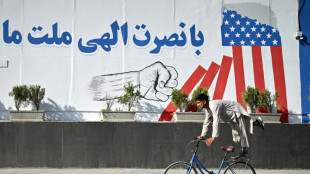 Flags, music as Taliban authorities mark five years ruling Afghanistan
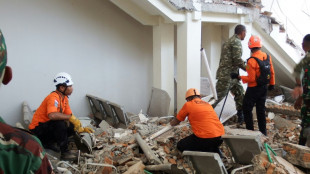 'Like we were on a trampoline': Indonesia quake kills 20, thousands flee
 Australia run riot to crush Japan 56-17 in Townsville

 Stolen Matisse works tied to infamous art thief in Brazil

 Hasan strikes twice for Bangladesh to reduce Australia to 51-2

 Powerful quake off Indonesia kills 20, sparks mass evacuations
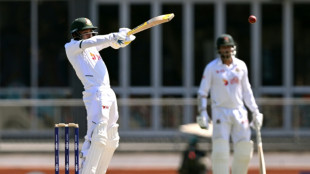 Mehidy half-century steers Bangladesh to 228-run lead in Australia Test
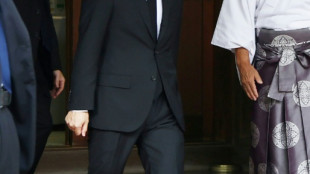 Japan defence minister visits war shrine, PM stays away
 Viennese woman sues city over 'discriminatory' toilet fees
 Venezuelan amputees adjust to new life after quakes

 Venezuela frees 131 prisoners amid post-Maduro transition talks

 Arteta tells Arsenal fans not to fret over his future
 Mexico's Indigenous chief justice hits back at discrimination

 Werro wins 800m race for the ages, Warholm and Tamberi hit four

 Jimenez rescues dramatic Wolves draw in Championship opener

 Taliban govt to mark five years ruling Afghanistan
Kuwaiti women are angry after the military, having allowed female soldiers in combat roles, decided they need the permission of a male guardian and banned them from carrying weapons.
Activists have decried the policy as "one step forward, two steps back" after the defence ministry also decided that women in the armed forces, unlike civilians, must wear head coverings.
The moves have sparked an online backlash in Kuwait, usually regarded as one of the most open societies in the Gulf.
"I don't know why there are these restrictions to join the army," Ghadeer al-Khashti, a sports teacher and member of Kuwait Football Association's women committee, told AFP.
"We have all kinds of women working in all fields, including the police force."
She said her mother had helped the resistance when Iraqi dictator Saddam Hussein in 1990 invaded Kuwait and occupied it for seven months before being pushed out by a US-led international coalition.
"My mum during the Iraqi invasion used to hide weapons under her abaya and transport them to members of Kuwait's resistance, and my father encouraged it," said Khashti.
"I don't understand on what basis they see women as weak."
The ministry decided in October to allow women in combat roles but then imposed the restrictions after the defence minister was questioned by conservative lawmaker Hamdan al-Azmi.
Azmi, emboldened by an Islamic religious edict, or fatwa, had argued that having women in combat roles "does not fit with a woman's nature".
- 'Women martyrs' -
Lulwa Saleh al-Mulla, head of the Kuwaiti Women's Cultural and Social Society, said the ministry's restrictions are discriminatory and unconstitutional and vowed legal action by the organisation.
"We have women martyrs who defended their country of their own volition," she told AFP. "No one ordered them to do that but the love for their country.
"We are a Muslim country, that is true, but we demand the laws not be subject to fatwas. Personal freedom is guaranteed in the constitution, on which the country's laws are based."
Kuwaiti women earned the right to vote in 2005 and have been active both in cabinet and parliament, though they are poorly represented in both.
Unlike most Gulf countries, Kuwait is known to have an active political scene, with MPs regularly challenging the authorities.
Earlier this month, dozens of Kuwaiti women staged a protest against the suspension of a women's yoga retreat deemed "indecent" by conservatives.
One of them was Azmi who, in Twitter posts, denounced the retreat as "dangerous" and "alien to our conservative society".
Women protesters carried placards denouncing the "exploitation of women's issues" in politics, as well as the "regime of fatwas" and "guardianship of women".
The debate about the army's new rules for women has taken an irrational turn, said Ibtihal al-Khatib, an English-language professor at Kuwait University.
"The army needs to integrate both women and men without discrimination," the feminist academic told AFP.
"Danger does not differentiate between men and women, and neither does death during battle."
T.Khatib--SF-PST