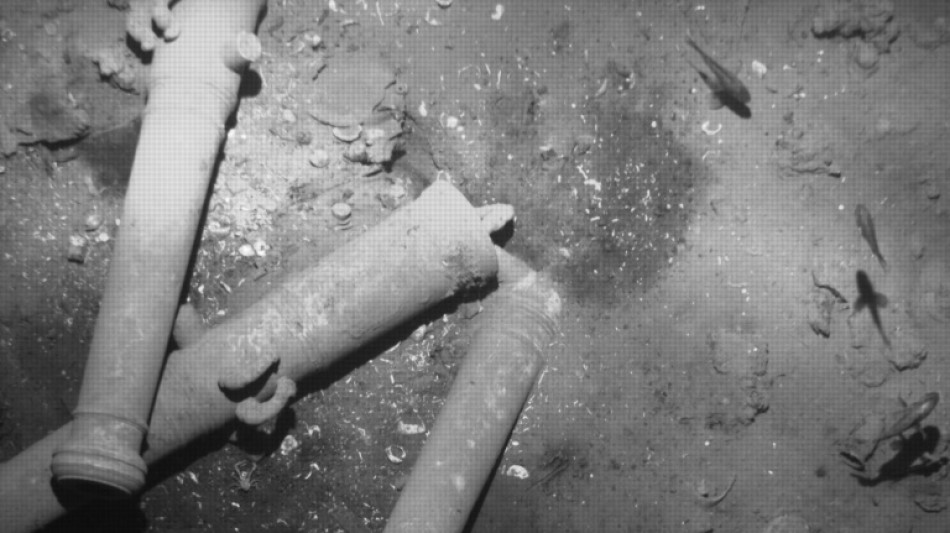
Colombia eyes 200 tonnes of galleon gold

 El Nino’s Weakening Grip on Tamil Nadu Rainfall Hinges on Potential Cyclone

 South Africa Places 36 Hospitals on Standby for Possible Imported Ebola Cases

 Two A1 Crashes Create Kilometres of Rush-Hour Congestion

 Luxembourg City Plans €13 Million Abrigado Centre for 2029

 Luxembourg Housing Petition Passes Threshold for Parliamentary Consideration

 Raheem Sterling Receives Suspended Sentence After Lamborghini Crash

 Tamil Nadu Secures Rs 58,214 Crore in Investments at Vettri Conclave

 فرنسا تدعو لتجريم "الفصل العنصري القائم على الجنس" دولياً

 أزمة الصواريخ الاعتراضية في البنتاغون: استنزاف المخزونات يفرض تعبئة صناعية حتى 2030

 Huawei Found Guilty of Trade Secret Theft in Landmark US Case

 Indian Markets Set for Gain as Foreign Inflows Offset Tariff Fears
Colombia took a step Thursday toward recovering a long-lost Spanish wreck and its fabled riches, but it may be a rough ride as Spain and native Bolivians have also staked claims on the booty.
Long the daydream of treasure hunters worldwide, the wreck of the San Jose galleon was first located off Columbia's coast in 2015, but has been left untouched as the government determines rules for its recovery.
Colombia was a colony of Spain when the San Jose was sunk, and gold from across South America, especially modern-day Peru and Bolivia, was stored in the fort of its coastal city, Cartagena, before being shipped back to Europe.
The Colombian government considers the booty a "national treasure" and wants it to be displayed in a future museum to be built in Cartagena.
According to a presidential decree released Thursday, companies or individuals interested in excavating the ship will have to sign a "contract" with the state and submit a detailed inventory of their finds to the government as well as plans for handling the goods.
The uber-loot, which experts estimate to include at least 200 tonnes of gold, silver and emeralds, will be a point of pride for Colombia, Vice President and top diplomat Marta Lucia Ramirez said in a statement.
Long the daydream of treasure hunters worldwide, the San Jose galleon was sunk by the British Navy on the night of June 7, 1708, off Cartagena de Indias.
The San Jose was at the time carrying gold, silver and precious stones which were to be delivered from the Spanish colonies in Latin America to the court of King Philip V.
Only a few of the San Jose's 600-member crew survived the wreck.
At the end of 2015, then-Colombian President Juan Manuel Santos announced the discovery of the exact location of the wreck, which was confirmed by the ship's unique bronze cannons with dolphin engravings.
Colombia has said it will cost about $70 million to carry out a full salvage operation on the wreckage, which is at a depth of between 600 and 1000 meters (2000-3200 feet).
Spain says the wreck is its own, as a ship of state; and an indigenous group in Bolivia, the Qhara Qhara, says the treasure belongs to them, since their ancestors were forced to mine it from what was in the 1500s the world's largest silver mine.
R.Halabi--SF-PST

