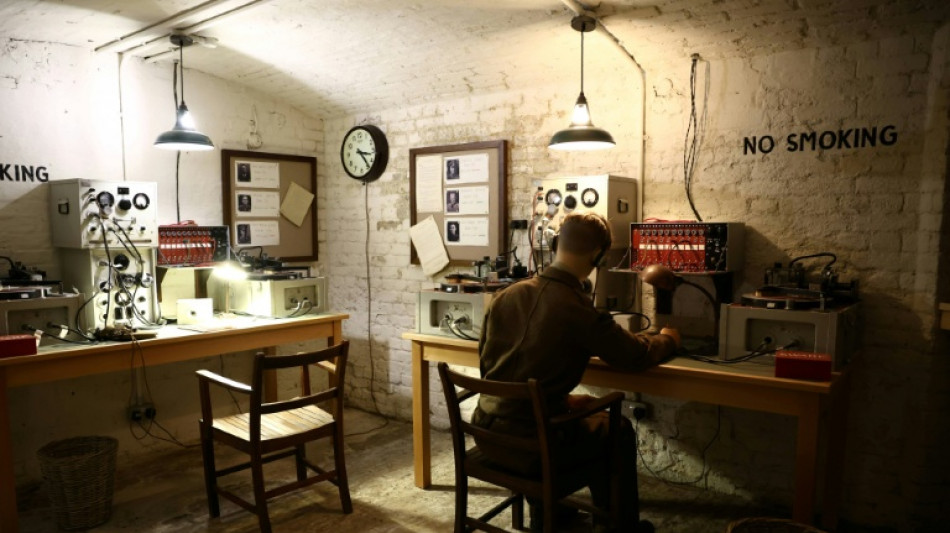
UK mansion where 'listeners' spied on Nazi generals becomes museum / Photo: Henry NICHOLLS - AFP

 Indonesian court hears 'negligence' complaint against state over fires, haze

 Rubio in Greece to urge against Western civilisation 'decline'
 Micron workers at Taiwan plant vote in favour of strike
 In 'The Social Reckoning,' Jeremy Allen White takes on Facebook's 'frightening' ambition

 Chip industry activists call for South Korea to recognise cancer cases

 Famine-scarred southern Madagascar braces for El Nino
 How the EU regulates lobbyists
 I.Coast refuge offers lifelong care for youngsters scorned as 'sorcerers'

 Indian central bank hikes rates for first time in more than 3 years
 Hotel Blacklist Launches New Accommodation Industry Risk Assessment Tool

 Bangladesh nuclear plant draws hope -- and worry

 US beat Canada 1-0 to wrap up four-win international break

 Turkey, Australia's joint COP31 leadership raises doubts

 For Turkish NGOs, COP31 offers rare space for action

 Sleep, appetite, gene-editing experts contend for Nobel chemistry prize

 Nobel Peace Prize haunted by the 'spectre' of Trump

 Africa launches own credit agency in bid for cheaper borrowing

 US, China, EU: three paths to regulating AI
 Australia's High Court rules against coal mine in landmark climate case

 Australia touts new funds for Pacific infrastructure at Fiji 'pre-COP'

 Eva Marie Saint, Oscar winner of Hollywood classics, dies at 102

 Australia probes app used in cheap smart glasses over privacy fears
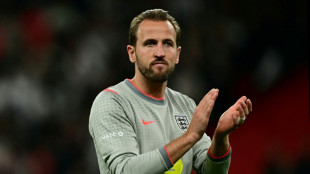
 England needed to 'move on' from World Cup pain, says Tuchel

 O'Neill to stay at Celtic after period of "reflection"

 Kane marks 125th England cap with Wembley Nations League double

Upstairs, Nazi generals enjoyed wine and lounged in elegant rooms. Downstairs in the basement, a team of covert listeners followed their chatter, gleaning vital insights into Germany's war plans.
During World War II, Trent Park, a country house north of London, was turned into a camp for high-ranking German prisoners of war.
Now it has become a museum called Trent Park House of Secrets, which highlights the role of the team of German speakers, most of them Jewish refugees, who transcribed titbits from the prisoners' bugged conversations.
"Trent Park is one of a network of intelligence houses, let's call them, the most famous of them being Bletchley Park," museum director Giuseppe Albano told AFP.
Depicted in the Oscar-winning film "The Imitation Game", Bletchley Park, north of London, was a country house where mathematician Alan Turing cracked the code on encrypted Nazi messages.
For Albano, Trent Park is "on a par in terms of the military intelligence that was gained and... was used by the British government to shorten the length of the Second World War".
It was part of a network of country houses with similar set-ups for eavesdropping, with the gathered intelligence then shared with Bletchley Park.
The idea to accommodate Nazi generals in comfort to lure them into indiscretions was a "brilliantly devious strategy", Albano said.
Trent Park was famed for its fashionable interiors in the 1930s when it was owned by a wealthy politician and guests included Charlie Chaplin and Winston Churchill.
During the war, the government handed it to a top-secret military intelligence unit, and engineers wired it with hidden microphones throughout -- even in the garden.
These connected to listening equipment downstairs in the servants' quarters, monitored day and night.
A total of 84 generals and 22 lower-ranking officers were held in the house -- known as No. 11 Camp -- between 1942 and 1945, served by valets and even allowed out on day trips.
They included General Dietrich von Choltitz, the last Nazi commander in Paris, who arrived in late August 1944 after defying Hitler and surrendering the city.
- Rocket secrets -
Not realising they were audible even leaning out of windows or in the garden, the prisoners let slip secrets, including details of the development of the first ballistic missiles, V-2s.
This helped the British to bomb the research facility and delayed the use of the rockets, which first hit London in 1944.
The government removed the bugs when the war ended, but some wiring was left behind and is now on display at the museum, which opened as part of redevelopment by a property company.
The transcripts were released to the National Archives, but "some things are still classified", said Albano.
In the museum's recreated listening rooms, visitors can hear actors reading out some of the conversations.
One prisoner refers to a "rocket testing site" while discussing bratwurst supplies for the top brass.
Some also admitted atrocities. Von Choltitz said "the worst job I carried out was the liquidation of Jews".
Britain did not hand this to war crimes trials, however, to avoid revealing how they had obtained the information.
"What happened at Trent Park was obviously very important and it's good it's being commemorated," said Adam Ganz, author of a radio play broadcast by the BBC called "Listening to the Generals".
His late father, Peter, was recruited as a listener after fleeing Germany where he was detained in Buchenwald concentration camp.
The Oxford professor never spoke publicly about his war work, Ganz said, but "I think it was something he was proud of, committed to".
The government trusted the listeners with the most sensitive secrets, but at the time no one knew of their role and "there was widespread hostility to refugees", Ganz noted.
"It's important and valuable that that contribution is being recognised."
B.AbuZeid--SF-PST