UK woman felt 'violated, assaulted' by deepfake Grok images / Photo: Lionel BONAVENTURE - AFP

 The British historian helping the French rediscover de Gaulle

 Dodgers beat Braves to advance, Guardians survive in MLB playoffs
 Latin American, Caribbean women top Nobel literature buzz

 US says Fiji-based Chinese official paid bribes for Beijing
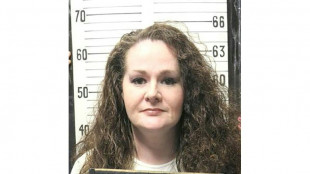 After botched US execution, Christa Pike was nearly taken off life support

 Guinea-Bissau junta urges military unit loyal to ex-president to disarm

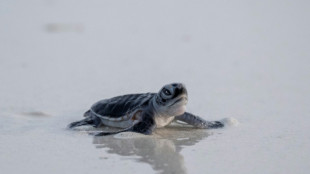 As species decline, green turtles offer glimmer of hope

 Brothers Scott and Beauden Barrett named to start for All Blacks

 EU trade chief seeks to dial down China tensions

 'Never again Bolsonaro': thousands march ahead of Brazil election runoff

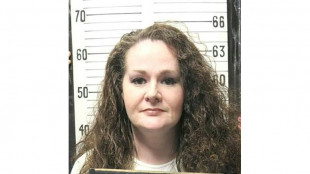 After botched execution, US woman was nearly taken off life support before revival

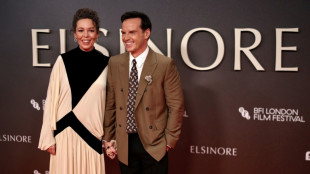 Searing AIDS drama 'Elsinore' opens London film festival

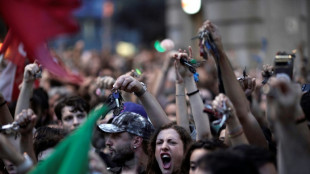 Evicted pensioner who sparked Spain housing protests dies: tenant union

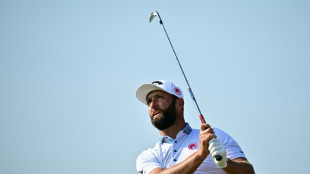 Golf star Rahm quitting LIV tour over 'unacceptable' terms
 Thousands march fearing return of a Bolsonaro presidency in Brazil

 French PM denies police ordered to confront student protesters
 Rubio touts US power, calls on Europe to emerge from 'slumber'

 Trump says 'we don't think' Russian plague is bio-weapon

 Five children among 26 killed in Ukraine after Russian strikes
 Man City should 'accept' punishment for rule breaches, says Lineker

 US woman who survived botched execution is awake and speaking

 From 1800s to modern pharma: a Nobel-winning chemistry quest

 Southampton boss Eckert given suspended ban over 'Spygate'
 Russia warns of 'false' information as second plague case reported

 IEA ready to release more oil reserves if necessary

British academic Daisy Dixon felt "violated" after the Grok chatbot on Elon Musk's X social media platform allowed users to generate sexualised images of her in a bikini or lingerie.
She was doubly shocked to see Grok even complied with one user's request to depict her "swollen pregnant" wearing a bikini and a wedding ring.
"Someone has hijacked your digital body," the philosophy lecturer at Cardiff University told AFP, adding it was an "assault" and "extreme misogyny".
As the images proliferated "I had ... this sort of desire to hide myself," the 36-year-old academic said, adding now "that fear has been more replaced with rage".
The revelation that X's Grok AI tool allowed users to generate images of people in underwear via simple prompts triggered a wave of outrage and revulsion.
Several countries responded by blocking the chatbot after a flood of lewd deepfakes exploded online.
According to research published Thursday by the Center for Countering Digital Hate (CCDH), a nonprofit watchdog, Grok generated an estimated three million sexualised images of women and children in a matter of days.
CCDH's report estimated that Grok generated this volume of photorealistic images over an 11-day period -- an average rate of 190 per minute.
After days of furore, Musk backed down and agreed to geoblock the function in countries where creating such images is illegal, although it was not immediately clear where the tool would be restricted.
"I'm happy with the overall progress that has been made," said Dixon, who has more than 34,000 followers on X and is active on social media.
But she added: "This should never have happened at all."
She first noticed artificially generated images of herself on X in December. Users took a few photos she had posted in gym gear and a bikini and used Grok to manipulate them.
Under the UK's new Data Act, which came into force this month, creating or sharing non-consensual deepfakes is a criminal offence.
- 'Minimal attire' -
The first images were quite tame -- changing hair or makeup -- but they "really escalated" to become sexualised, said Dixon.
Users instructed Grok to put her in a thong, enlarge her hips and make her pose "sluttier".
"And then Grok would generate the image," said Dixon, author of an upcoming book "Depraved", about dangerous art.
In the worst case, a user asked to depict her in a "rape factory" -- although Grok did not comply.
Grok on X automatically posts generated images, so she saw many in the comments on her page.
This public posting carries "higher risk of direct harassment than private 'nudification apps'", said Paul Bouchaud, lead researcher for Paris non-profit AI Forensics.
In a report released this month, he looked at 20,000 images generated by Grok, finding over half showed people in "minimal attire", almost all women.
Grok has "contributed significantly to the surge in non-consensual intimate imagery because of its popularity", said Hany Farid, co-founder of GetReal Security and a professor at the University of California, Berkeley.
He slammed X's "half measures" in response, telling AFP they are "being easily circumvented".
F.AbuZaid--SF-PST