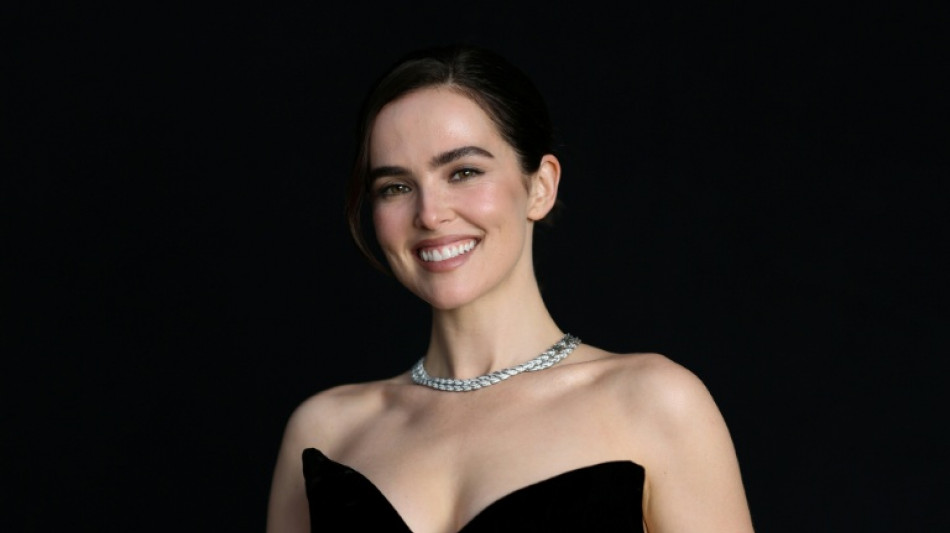
AI cannot make cinema, director Linklater says / Photo: VALERIE MACON - AFP

 Alex Bodi pushes ahead with expansion: ALIX LASERS showroom planned for Bucharest

 Fossil fuels off COP31 agenda as global output keeps rising

 Haze not 'a threat' to Singapore F1 race: organisers
 COP31 organisers say to seek 'ambitious' action with their text

 Bartunkova thrashes Muchova to reach China Open semi-finals

 Drone hits Yandex data centre, in first such attack on Russia

 Oil prices surge and stocks sink on fresh inflation worries

 AI startup Manus raises $500m after Meta acquisition blocked by China

 From refuge to repatriations: Malaysia's Myanmar U-turn

 Morikawa says LIV players face 'business decision' after Rahm exit

 Tenzing Norgay's son says Himalayas sending climate warning

 On your bike! Bottas opts for two wheels to reach Singapore GP

 Alcaraz, Sinner, Osaka commit to Australian Open '1 Point Slam'

 Dodgers beat Braves to advance in MLB playoffs, Rays oust Yankees

 'A sun as black as my lungs': how corruption crucified a polluted Albania city

 The British historian helping the French rediscover de Gaulle

 Dodgers beat Braves to advance, Guardians survive in MLB playoffs
 Latin American, Caribbean women top Nobel literature buzz

 US says Fiji-based Chinese official paid bribes for Beijing

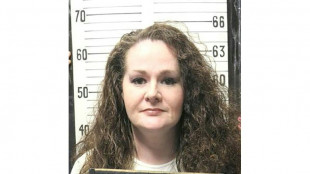 After botched US execution, Christa Pike was nearly taken off life support

 Guinea-Bissau junta urges military unit loyal to ex-president to disarm

 As species decline, green turtles offer glimmer of hope

 Brothers Scott and Beauden Barrett named to start for All Blacks

 EU trade chief seeks to dial down China tensions

 'Never again Bolsonaro': thousands march ahead of Brazil election runoff

Can great art be made without human genius and all its flaws? It's a vital question at a time when artificial intelligence threatens to subsume Hollywood.
Through new movies "Nouvelle Vague" and "Blue Moon," director Richard Linklater offers an answer delving into the lives of two brilliant, volatile men whose films and plays shaped French New Wave cinema and Broadway.
His conclusion?
"AI is not going to make a film," the US indie auteur tells AFP.
"Storytelling, narrative, characters? Something that connects to humanity? That's a whole 'nother thing," says the Texan whose notable films include "Boyhood," the "Before" trilogy, "School of Rock" and "Hit Man."
Linklater's "Nouvelle Vague," streaming on Netflix from November 14, charts how young French director Jean-Luc Godard defied all filmmaking convention to create his 1960 classic "Breathless."
It captures the swagger, charisma and impulsiveness with which Godard convinced financial backers and Hollywood starlet Jean Seberg to make a debut feature that had neither a script nor a workable filming schedule.
"He's a little full of shit, but he's a genius. A revolution is going on, but he's the only one who knows it," Linklater says of Godard, an icon of cinema's French New Wave movement in the late 1950s and 60s.
By contrast "Blue Moon," in cinemas now, depicts Broadway lyricist Lorenz Hart at the end of his career.
With composer Richard Rodgers, Hart wrote classic songs like "The Lady is a Tramp," "My Funny Valentine" and, of course, "Blue Moon."
But the film captures a single evening, in which it becomes clear Rodgers has moved on to even greater success with new partner Oscar Hammerstein II, with the debut of their hit musical "Oklahoma!"
Within months, Hart will be dead from alcoholism.
"It's become very clear that the times are leaving him behind. They're leaving behind his genius," says Linklater.
- 'No algorithm is gonna do that' -
Which brings us back to the question of human genius and art.
For Linklater, AI is "just one more tool" that artists can use, but it "doesn't have intuition or consciousness."
"I think it's going to be less revolutionary than everybody thinks in the next few years," he told AFP in an interview ahead of the Los Angeles premiere of "Nouvelle Vague" at The American French Film Festival (TAFFF).
The French New Wave's trademark documentary-style realism was made possible in part by technology -- the arrival of cheap, light, portable cameras.
But Linklater rejects the claim that the cost savings and flexibility offered by AI could unleash another filmmaking revolution.
"You're gonna see some cool stuff," he concedes.
But "the hardest thing to do is still to tell a compelling story that people want to see and be engaged with," he says.
"That's a lot of points you have to hit -- that's acting, that's story structure, that's pace, style.
"No algorithm is gonna do that. No prompt is gonna do that."
- 'Authentic' -
Among Linklater's future projects is "Merrily We Roll Again," adapted from Stephen Sondheim's musical.
Set over two decades, "Merrily" charts the demise of a friendship between three artists, and is told in reverse chronology.
As if to prove his point about technology, Linklater has decided to shoot the film over a 20 year span, allowing the actors to truly age backward on screen.
It is a more complex variation of his Oscar-winning "Boyhood" -- which he filmed across 12 years.
Of course, AI has recently been used to "de-age" actors, like in Tom Hanks' 2024 film "Here." But Linklater has little interest.
"It's not a visual trick, you know? I really want an actor of a certain age to be playing a character," he explains.
Asking a 25-year-old to play a 45-year-old is "not authentic" because young people "don't know what that even means," he says.
"I want the actors to be that much older and wiser."
So, don't expect to see "Merrily" in theaters any time soon.
"That's my hanging-on-to-humanity approach!" chuckles Linklater.
B.Mahmoud--SF-PST