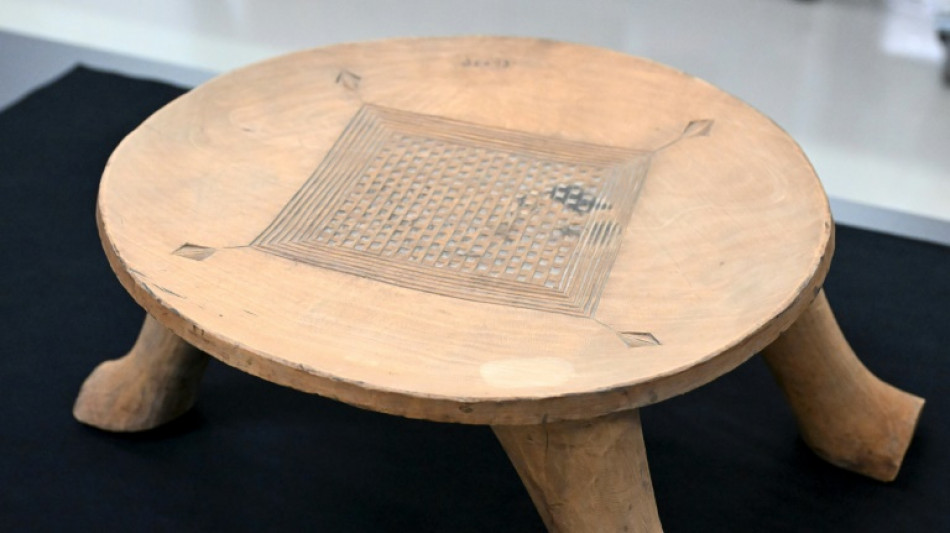
Finland returns sacred stool looted by France to Benin / Photo: Jussi Nukari - Lehtikuva/AFP

 Ms. Rachel Says Celebrity Silence on Gaza Is 'F--ked Up' and Drives Her to Swear

 Maryland Regulators and Air Force Clash Over Jet Fuel Spill Cleanup and Golf Course Exemption

 Bishop Museum Races to Save Rare Megamouth Shark Specimen

 Musk Questions AI Development Viability as SpaceX Leasing Revenue Surges

 مصطفى معروفي ينشر قصيدة 'أصوغ كلامي أهتدي بتجاربي'

 Luxembourg Housing Petition Passes Threshold for Parliamentary Consideration

 Raheem Sterling Receives Suspended Sentence After Lamborghini Crash

 Audience to Choose the Set List at Luxembourg's First FAMIL Jukebox Night

 Luxembourg Pay Rise Delayed as Regional and World Headlines Develop

 مواجهة في البرازيل بين نشطاء وفلسطينيين وسياح إسرائيليين حول جدارية مؤيدة

 رئيس جامعة القدس يستعرض نموذج الشراكة بين التعليم العالي والصناعة في قمة QS بأبوظبي
Benin on Tuesday received from a Finnish museum a sacred "katakle" three-legged stool, symbol of the African nation's artistic wealth looted by French colonial troops in the late 19th century.
The stool was the missing piece from 27 items of cultural treasure from the royal palaces of Abomey, inhabited by the kings of the west African kingdom of Dahomey, known for its vibrant artistic culture.
Located in the south of modern-day Benin, Dahomey was founded in 1625 by the Fon people, who built up a powerful military and trading empire lasting for more than 250 years.
France had previously returned the other 26 treasures from the collection to Benin in November 2021, following a promise made by President Emmanuel Macron.
"Each of the pieces, torn away from its original context, bears a voice, a function, a story," said Minister of Culture Jean-Michel Abimbola, at the handover in Cotonou.
"They bear witness to the depth of traditional political institutions, the ingenuity of artistic skill and the grandeur of a civilisation rooted in spirituality, aesthetics and plurality."
Many artworks looted under imperial rule were seized by colonial administrators, troops or doctors, who passed them down as heirlooms.
In turn their descendants donated the artworks to museums in Europe and the United States.
- 'Common heritage' -
The royal seat had once belonged to King Behanzin and was looted by French General Alfred Dodds when the royal palace was sacked in 1892.
It was used during official ceremonies to symbolise stability, power and unity and for coronations.
First brought to Paris's Musee de l'Homme in 1937, an exchange with Finland saw the item moved to Helsinki two years later.
Abimbola paid tribute to the "patient work tracing (the item), backed by international cooperation mechanisms between museum institutions" which had enabled the stool to be located and returned.
He said the restitution of Benin's cultural heritage was something which "reintegrates our national narrative, enriches our living memory and revives our common heritage."
His Finnish counterpart, Mari-Leena Talvitie, present for the handover, expressed delight at the "excellent cooperation between the two countries" noting the stool had been preserved in "excellent condition".
Dah Metokan Ghezo, 59, an Abomey prince and dignitary, lauded the return to the fold of "one of the most essential elements of Abomey's ceremonial rituals".
According to a 2018 report commissioned by Macron, French museums retain around 90,000 items of sub-Saharan African artwork, with the Quai Branly museum alone home to around 78,000.
U.Shaheen--SF-PST

