
Four men loom large in Microsoft history / Photo: CHIP SOMODEVILLA - GETTY IMAGES NORTH AMERICA/AFP

 Man City whistleblower Pinto to stay under police protection

 US leads fresh Ukraine peace push with Miami talks

 Verstappen continues resurgence with pole for Singapore sprint

 Cuban ration book, symbol of the revolution, gathers dust

 Stocks advance, oil retreats as Trump rules out pre-vote Iran attack

 Man City case causing 'uncertainty' for whole Premier League, says Iraola

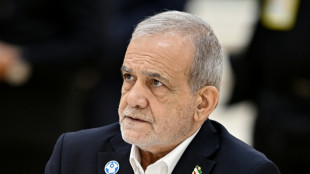 Talks with Iran can only succeed without threats, president says

 Home hope Zheng sets up Mertens clash in China Open semis

 Lombardia promises gripping end to season in Pogacar absence

 Barca skipper Raphinha out against Getafe and Galatasaray

 MEXC and Payward Highlight Collaboration as Crypto and TradFi Converge at TOKEN2049

 EU states agree beefed-up European financial markets watchdog

 Eritrea, Ethiopia trade barbs as Tigray rebels retreat

 Kompany 'proud' of Man City success despite guilty verdict

 Man City will win appeal over financial charges, says Maresca

 Fernandez logs record lap at Indonesia MotoGP practice

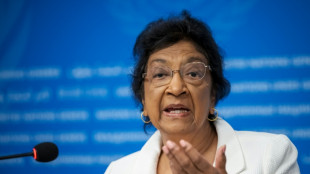 Navi Pillay: S.Africa's global rights activist and Nobel winner

 Ufunded Launches “Spotlight” Series, Documenting the Minds Shaping Modern Trading

 Russell goes fastest in practice for smoggy Singapore GP

 For exiled Russian director Zvyagintsev, triumph without belonging

 Home hope Zheng storms into China Open semi-finals

 Zverev churns out win in Shanghai Masters opener

 Hurricane Isaias strengthens en route to US Gulf Coast

 US activists deploy poll volunteers over Trump intimidation fears

 Saint Laurent designer Vaccarello leaves after glittering decade

Microsoft was shaped by Bill Gates, Paul Allen, Steve Ballmer and Satya Nadella over the course of the last half-century in the male-dominated tech world.
Friends since childhood in Seattle, Gates and Allen founded Microsoft in 1975 with a stated goal of putting a computer in every office and home.
- Gates -
Born William Henry Gates III in 1955 in Seattle, he began writing software programs while a 13-year-old schoolboy.
Gates dropped out of Harvard in his junior year to start Microsoft with Allen.
The childhood friends created MS-DOS operating system, since renamed Windows, which went on to dominate office work.
Gates built a reputation as a formidable and sometimes ruthless leader.
Critics argue he unfairly wielded Microsoft's clout in the market, and the US pressed a winning antitrust case against the company in the late 1990s.
In 2000, Gates ceded the CEO job to Ballmer, whom he befriended while the two were students at Harvard.
Gates chose to devote himself to a charitable foundation he established with his then-wife, Melinda.
He resigned from Microsoft's board of directors in 2020 -- shortly after the firm acknowledged the existence of an "intimate" relationship with an employee in the past.
The following year, the couple divorced. Melinda Gates faulted him for his relationship with disgraced financier Jeffrey Epstein, who was found guilty of sexually exploiting under-age girls.
His support of Covid-19 vaccine campaigns and agriculture programs that focus on climate change and women made Gates a favorite target of conspiracy theorists.
Baseless accusations aimed at Gates include him putting tracking chips in vaccines.
- Allen -
Paul Allen, born in 1953 in Seattle, was a schoolmate of Gates.
Allen was 10 when he started a science club at home, and would later bond with young Gates over computers.
"Microsoft would never have happened without Paul," Gates wrote in tribute to Allen, who died of cancer complications in 2018.
Gates told of Allen showing him a magazine featuring a computer running on a new chip, and warning that a tech revolution was happening without them.
Allen is credited with combining "microcomputer" and "software" to come up with "Micro-Soft".
He left Microsoft in 1983, but remained a board member until 2000. He went on to accuse Gates and Ballmer of scheming to "rip him off" by getting hold of his shares while he battled cancer.
- Ballmer -
Ballmer was seen as a devoted salesman who ramped up Microsoft revenue while neglecting innovation.
A Michigan native with a talent for mathematics, he graduated from Harvard.
Ballmer joined Microsoft in 1980 and was best man at the 1994 wedding of Bill and Melinda Gates.
Ballmer, now 69, succeeded Gates as chief executive in 2000.
His enthusiastic gestures, awkward dance moves, and voice-straining shouts made him the stuff of internet memes and company lore.
Ballmer oversaw the launch of Xbox video game consoles, Surface tablets, and Bing online search engine. Microsoft bought Skype and Nokia's mobile phone division on Ballmer's watch.
During his tenure, Microsoft was seen as clinging to PCs while lifestyles raced toward mobile devices and cloud-based software.
His product failures include Zune digital music players, Kin mobile phones, and a Vista version of Windows.
- Nadella -
Nadella took over as chief executive in early 2014 and says he learned leadership skills playing cricket as a boy growing up in India.
Nadella, who will turn 58 in August, was hired in 1992 while studying at the University of Chicago.
Early in his academic career, a drive to build things led him to pursue computer science, a focus not available during his engineering studies at Mangalore University.
Nadella's Microsoft bio shows stints in research, business, server and online services units.
For relaxation, he turns to poetry, which he likened to complex data compressed to express rich ideas in few words.
Nadella held firm that for Microsoft to succeed, it needed to adapt to a "cloud-first, mobile-first world".
Soon after becoming chief, he ordered the biggest reorganization in Microsoft's history.
He is credited with guiding Microsoft from a fading packaged software business to the booming market for cloud services.
Microsoft has been pumping billions of dollars into AI, investing in ChatGPT-maker OpenAI and infusing the technology across its products.
In a rare stumble, Nadella triggered an uproar his first year as chief by suggesting during an on-stage discussion that working women should trust "karma" when it comes to securing pay raises.
Microsoft's acquisitions under Nadella include Sweden-based Mojang, maker of the popular video game Minecraft; social network LinkedIn, and the GitHub online platform catering to software developers.
F.AbuZaid--SF-PST