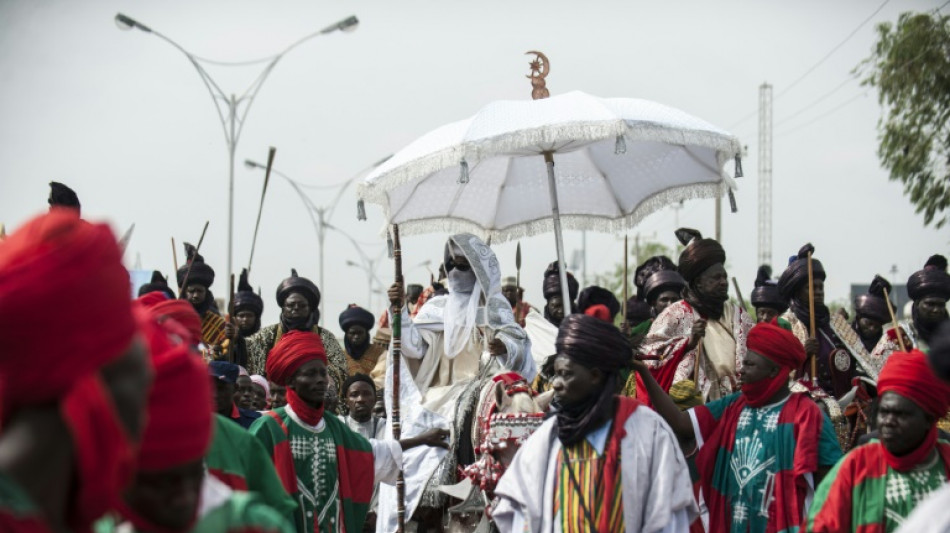
Eid festivities in north Nigeria make UNESCO heritage list / Photo: STEFAN HEUNIS - AFP

 المفكر الفلسطيني نسيم قبها يطرح «المعلم المرآة»: بيان أنطولوجي لاسترداد إنسانية التعليم

 فاطمة بوش ترفع شعار 'ليحيا المسيح الملك' في ختام ملكة جمال الكون

 أين الأمن القومي العربي؟.. تحليل نقدي لغياب الرؤية المشتركة

 Crude Oil Prices Rise on Reports of Houthi Attack on Saudi Refinery

 El Nino’s Weakening Grip on Tamil Nadu Rainfall Hinges on Potential Cyclone

 Black Friday Discounts Cut Prices on Two Top-Rated Wiper Blades

 Twickenham Grounds Team Prepares Pitch for Six Matches in Three Days

 Luxembourg City Plans €13 Million Abrigado Centre for 2029

 Two A1 Crashes Create Kilometres of Rush-Hour Congestion

 South Africa Places 36 Hospitals on Standby for Possible Imported Ebola Cases

 Tamil Nadu Secures Rs 58,214 Crore in Investments at Vettri Conclave
UNESCO on Thursday added a colourful parade of Nigerian knights on horseback celebrating Islam's two holiest holidays to its intangible cultural heritage list.
Dating back to the 15th century, the processions see a prestigious religious ruler and 10,000 horse riders accompanied by musicians march through the streets of Kano, the largest city in Nigeria's predominantly Muslim north.
They take place twice a year on the Eid al-Fitr and Eid al-Adha holidays celebrated worldwide in the 10th and 12th months of the Islamic calendar, which follows the phases of the moon.
The festivities -- known as Durbar -- are also hosted by multiple cities in the Muslim-majority, Hausa-dominated north.
But they originated in Kano, Nigeria's second-largest city of four million people, home to one of the most senior religious authorities in the land.
"The Durbar is a festival of colour, respect, pride and harmony," said Hajo Sani, who represents Nigeria at the UN cultural body, at the 19th session of the Intergovernmental Committee for the Safeguarding of the Intangible Cultural Heritage in Paraguay's capital Asuncion.
"It is a powerful socio-cultural festival that brings together many ethnic groups, including the Hausa, the Fulani, Arabs, Nupe, Yoruba and Tuareg, thus integrating them into one community," she added.
- Historic religious title -
Escorted by a contingent of palace courtiers, officials and bodyguards, the opulently garbed emir is the central figure in every procession.
He and his entourage parade through the neighbourhoods of Kano, while locals pay their respects and show him support, according to UNESCO's website.
By tradition, the emir of Kano is the second most important Islamic ruler in the country after the Sultan of Sokoto, the highest religious leader in north Nigeria.
Nigeria's many traditional rulers have no constitutional powers but are important cultural custodians, wielding enormous influence in Africa's most populous country.
Kano police banned the Durbar that had been planned for June this year over security concerns, after tensions surged between two traditional chiefs competing for the emir's historic title.
The Durbar constitutes "an industry that creates jobs, economic empowerment within the communities", Sani said.
The festival has "grown to become popular to the point that many states across northern Nigeria now practice it, including the Federal Capital Territory Abuja as a carnival", she added.
The Durbar festivities join other Nigerian cultural landmarks on UNESCO's heritage list, including the northeastern Sukur cultural landscape near the border with Cameroon and the sacred grove of Osun-Osogbo in southern Nigeria.
R.AbuNasser--SF-PST
