
Facebook changing with times a decade after stock debut / Photo: Stephen Lam - GETTY IMAGES NORTH AMERICA/AFP

 Govt takes control of Turkey's most-watched news channel

 FIFA to offer members $6.35-billion development fund windfall

 US consumer inflation hotter than expected as midterms loom

 INmune Bio Inc. and Quantum Computing Inc. Partner to Apply Quantum Optimization and AI to Advance Alzheimer’s Drug Research and Explore New Applications for XPro

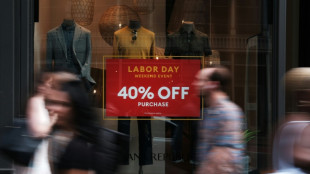 Hot US inflation data dents Wall Street stocks

 India sends 'cockroach' leaders to jail after protest

 'Sinners' director Ryan Coogler to reboot 'X-Files' for Disney

 Lufthansa wins contest for TAP Air Portugal stake

 AI worms, 'major' incident fears spur safety calls at industry summit

 Fuel shortage triggers queues on Indonesia's Bali island

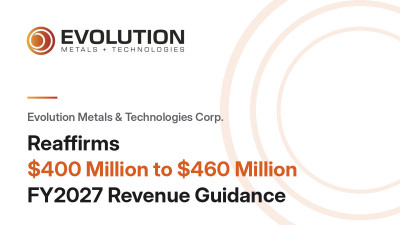 Evolution Metals & Technologies Corp. Reaffirms $400 Million to $460 Million FY2027 Revenue Guidance, Unveils Eight Sintered Magnet Grades Covering an Estimated 75% of Global NdFeB Revenue, and Moves to Answer U.S. Army Call for Rare Earth Magnets

 Trial defence says Russia used Nord Stream pipelines as 'weapon'

 Israeli settlers set fire to mosque in occupied West Bank

 Macron says French student protesters 'exploited' by political forces: spokeswoman

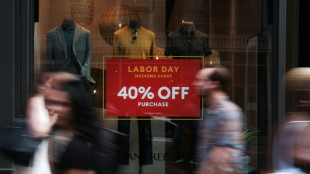 Stocks diverge ahead of key US inflation data

 Japan summons Russian ambassador to protest journalist's arrest

 Workers to strike at world's largest copper mine in Chile

 Ukraine accuses US of helping Russia as missiles hit Kyiv

 Drone hits data centre of Russia's largest bank

 Bivial AG Brings Its Complete Dashboard to Mobile

 Mont Blanc nearly two metres taller than in 2023: French surveyors

 Pope recovering after lung cancer operation that rattles Church

 Indonesia haze spikes Singapore pollution, shuts East Timor schools

 Higher borrowing costs an 'alarm signal' for France: finance minister

 Zelensky accuses Putin of disrespecting Trump after latest attacks
Facebook boss Mark Zuckerberg rang the opening bell remotely to cheers 10 years ago as the beloved social network made its stock market debut, culminating an all-night hackathon that included street hockey, costumes and music.
The Silicon Valley tech colossus rebranded as Meta has since seen its image tainted by accusations it has become a tech tyrant, putting profit over user privacy and even the good of society.
Meanwhile, the likes of TikTok, LinkedIn, Pinterest, Twitter and even Apple now vye with Meta for people's online attention as Facebook social network is increasingly seen as a place for older people.
"At the time it went public, Facebook was considered to be young, edgy and connecting people," Creative Strategies analyst Carolina Milanesi told AFP.
"Now to most people it sounds like political manipulation and advertising; Facebook is considered a data-hungry company."
- Ad-powered machine -
When Facebook became publicly traded on May 18, 2012, it was seen as a darling of the internet generation, connecting people in a "pure" way, Milanesi said.
But like other free online platforms, Facebook makes its money from ads targeted at people's interests.
The company tapped into information about people's online activities to become a digital advertising behemoth, raking in billions of dollars.
Critics say Meta focused on growth at the expense of safeguarding people's data as the number of users on its "family" of apps climbed into the billions.
In 2016, Facebook was embroiled in controversy over Russia's alleged use of it and other social media platforms to influence the outcome of the election that put Donald Trump in the White House.
The social network was caught up in scandal anew two years later after it was revealed that British consulting firm Cambridge Analytica stealthily harvested data of millions at Facebook and used it for political purposes, including trying to rally support for Trump.
Regulators in Europe passed a groundbreaking law to give people more control over their online data. Apple tweaked its mobile software to stymy apps like Facebook from snatching up people's data essential to effective ad targeting.
- Tough to beat -
Last year, the company changed its name to Meta in a nod to the metaverse -- the virtual world which Zuckerberg sees as the future of the internet.
Critics blasted the move as an effort to distract from scandals pounding Facebook.
With 2.94 billion monthly users, Facebook remains the biggest social media platform and a habit for the masses.
"Facebook is so far ahead that it is difficult to conquer," independent expert David Bchiri said.
Meta has spotted and adapted to threats. It has mimicked what makes rivals popular -- like launching Reels short-form videos in response to the TikTok phenomenon.
Meanwhile, businesses have come to embrace Meta's skill at targeting advertising and the ease with which they can connect with audiences through its apps.
Meta owns Facebook, Instagram, WhatsApp, Messenger and a virtual reality unit that includes Oculus.
Meta remains a valuable part of any ad campaign, said Keith Kakadia, founder and chief of marketing strategy firm SociallyIN.
"It's so data rich; that allows us to have robust targeting," Kakadia said.
"We're able to get in front of exactly who we need to get in front of and that gives a huge advantage to our clients."
- Into the metaverse -
While Meta is a powerhouse now, website-born Facebook was dangerously late adapting to smartphones becoming the center of people's lives.
That misstep is seen as part of the reason Zuckerberg is pouring billions of dollars into leading the way into the metaverse.
"They want to be there before they miss another wave of transition," Milanesi said of Meta rushing to virtual worlds where people live as avatars.
"There's more monetization opportunity when you're bringing digital and real life together in a more immersive way; they want to do it before somebody else does."
Meta investors, though, are concerned about the time and money it will take for Zuckerberg to fulfill his metaverse dream.
Facebook bought virtual reality gear maker Oculus seven years ago for $2 billion.
"I don't think they want to be the social media of the metaverse," Milanesi said.
"I'm expecting a much stronger pivot to linking consumers and businesses, either to buy stuff or to attend events, and less about people connecting on a personal level."
In the metaverse, Facebook users are more likely going to be shopping than checking what friends did on vacation, the analyst said.
"All brands want to jump on the metaverse band wagon; all have a big fear of missing out," said independent expert David Bchiri.
"Facebook will be low hanging fruit for those who don't want to invest too much time and resources but still want to be on it."
I.Yassin--SF-PST