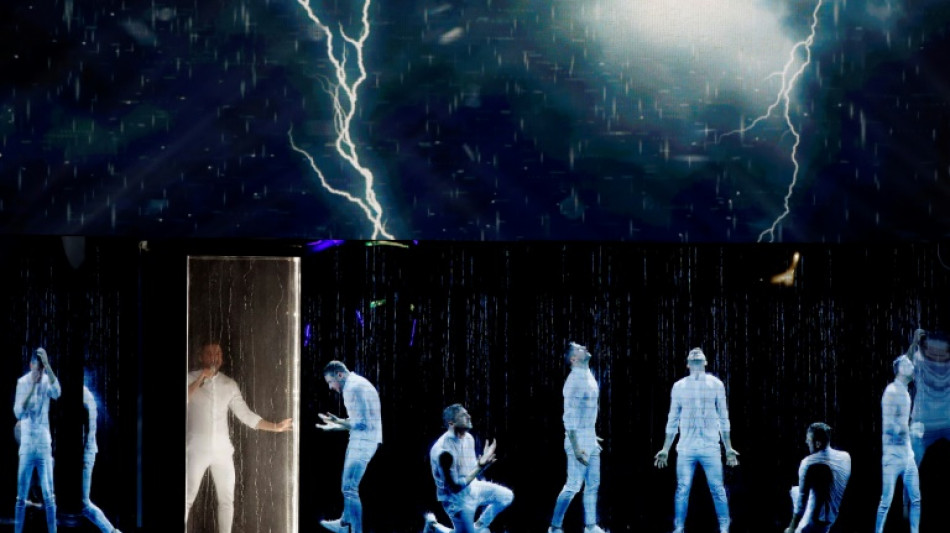
Nul points: Eurovision bars Russia over Ukraine conflict

 El Nino’s Weakening Grip on Tamil Nadu Rainfall Hinges on Potential Cyclone

 South Africa Places 36 Hospitals on Standby for Possible Imported Ebola Cases

 Two A1 Crashes Create Kilometres of Rush-Hour Congestion

 Luxembourg City Plans €13 Million Abrigado Centre for 2029

 Luxembourg Housing Petition Passes Threshold for Parliamentary Consideration

 Raheem Sterling Receives Suspended Sentence After Lamborghini Crash

 Tamil Nadu Secures Rs 58,214 Crore in Investments at Vettri Conclave

 فرنسا تدعو لتجريم "الفصل العنصري القائم على الجنس" دولياً

 أزمة الصواريخ الاعتراضية في البنتاغون: استنزاف المخزونات يفرض تعبئة صناعية حتى 2030

 Huawei Found Guilty of Trade Secret Theft in Landmark US Case

 Indian Markets Set for Gain as Foreign Inflows Offset Tariff Fears
No Russian entertainers will be permitted to take part in this year's Eurovision Song Contest following Russia's invasion of Ukraine, the European Broadcasting Union said Friday.
The glitzy annual musical pageant, which has millions of viewers in Europe and even Australia, will go ahead without any acts from Russia, the EBU's executive board decided.
"In light of the unprecedented crisis in Ukraine, the inclusion of a Russian entry in this year's contest would bring the competition into disrepute," the EBU said in a statement.
The invasion is causing a series of culture clashes across Europe and the United States.
Acclaimed Russian conductor Valery Gergiev, chief of Saint Petersburg's Mariinsky Theatre and known for his warm Kremlin ties, was suddenly dropped from concerts where he was due to lead the Vienna Philharmonic at New York's Carnegie Hall.
And on Friday the mayor of German city Munich warned Gergiev to speak out against the invasion, or risk losing his job as chief conductor of the Munich Philharmonic.
Mayor Dieter Reiter said he had told the maestro "to clearly and unequivocally distance himself from the brutal war of aggression that (President Vladimir) Putin is waging against Ukraine".
Gergiev has also faced pressure to speak out in Milan, where he is leading Tchaikovsky's "The Queen of Spades" at the Teatro alla Scala.
If he doesn't, "the collaboration will be over," Milan's mayor told the media.
London's Royal Opera House said on Friday it was cancelling a season of performances by Moscow's famed Bolshoi Ballet.
The call to exclude Russia from this year's Eurovision in Italy was "based on the rules of the event and the values of the EBU", the body said.
In addition, Russia residents will also be blocked from voting in the competition.
"They are completely excluded from the whole event," an EBU spokesman told AFP.
"The EBU is an apolitical member organisation of broadcasters committed to upholding the values of public service," its statement stressed.
The song contest "promotes international exchange and understanding, brings audiences together, celebrates diversity through music and unites Europe on one stage."
- Past musical furore -
The 66th edition is set to be held in May in Turin after the victory of lederhosen-wearing Italian rockers Maneskin in 2021.
This year is not the first time hostilities between Russia and Ukraine have spilled into the kitschy competition.
Moscow was angered when Ukraine won the 2016 contest with the ballad 1944 by Jamala, describing the Soviet persecution of her ethnic Tatar people in Crimea.
The peninsula had been annexed again by Russia in 2014, when the Kremlin also began backing a separatist war that even before this week's invasion had cost more than 14,000 lives.
Eurovision passions were inflamed further in 2017, when competition host Ukraine banned Moscow's pick, a wheelchair-bound singer named Julia Samoilova, for holding a 2015 concert in annexed Crimea.
Organisers were eventually forced to drop Russia from the contest after its state broadcaster decided not to air Eurovision in protest.
The 2016 contest marked Ukraine's second win, after also taking top honours in 2004 with Wild Dances by Ruslana.
Russia meanwhile has won Eurovision once since the competition began in 1956, with the song Believe performed by Dima Bilan in 2008.
Last year, Russian ally Belarus found itself excluded from the competition, amid unrest after strongman leader Alexander Lukashenko claimed a sixth presidential term in a vote the opposition and Western diplomats said was rigged.
Estonia, Slovakia, Latvia have seen measures against Russia's cultural presence, while the major sports events such as the Russian Grand Prix have been cancelled and the UEFA Champions League final moved from Saint Petersburg to Paris.
Among other cultural victims, the Zagreb philharmonic orchestra even removed two works by Russian composer Tchaikovsky from its concert later on Friday in solidarity with Ukraine.
Poland's deputy culture minister Jaroslaw Sellin praised Russia's "magnificent... music and literature" but condemned the "mad neo-imperial concepts" of today's leaders which mean "full cultural cooperation with Russia does not seem possible".
E.AbuRizq--SF-PST

