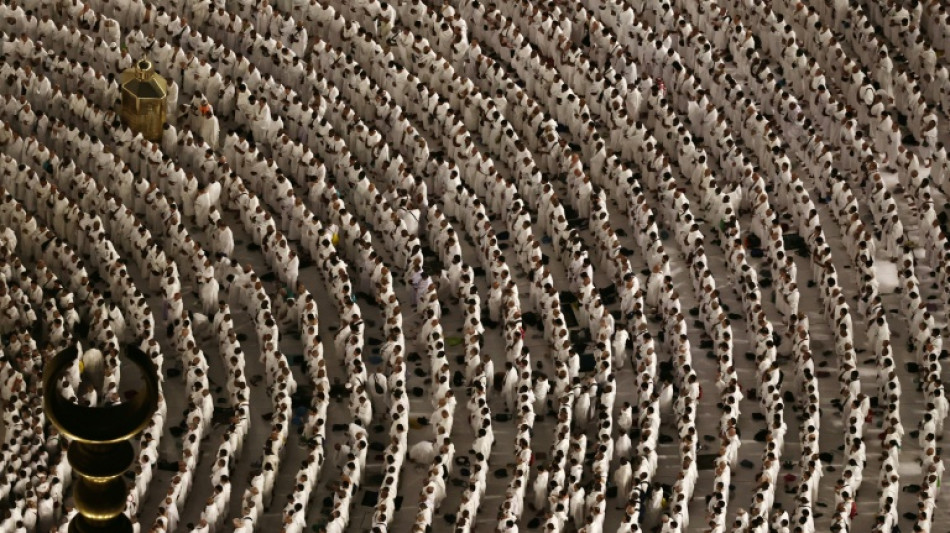
Saudi Arabia turns to drones to shield pilgrims from extreme heat
/ Photo: Zain JAAFAR - AFP

 Kung wins Vuelta time-trial as Mas retains lead

 DR Congo school fire leaves at least 14 children dead

 USA and France ease into women's Basketball World Cup semis

 ECB lifts borrowing costs amid energy shock, opens door for more hikes

 France defeat China to reach women's basketball World Cup semis
 Tribal Launches Campfire, Letting Business and Technical Teams Build on Salesforce Together

 Yemen's Houthis seize key city on Red Sea
 US producer inflation tops expectations as diesel costs jump
 Rubio ends South America swing with Peru security talks

 Defiant Iran seeks to bruise Trump ahead of midterms

 France withdraws support for Infantino in FIFA presidential election

 Evolution Metals & Technologies Provides Initial Revenue Guidance of $400-460mm for Fiscal Year 2027

 Clark-led USA thrash Hungary to move into women's World Cup semi-finals

 Vance takes spotlight as Republicans close Trump-heavy convention
 Russian skater Valieva loses neutral status
 Will Israel's right exploit sanctions in run-up to vote?
 'Metal Gear' creator moves to Xbox after Playstation cancellation

 Indonesia rescues six orangutans from fires in a week

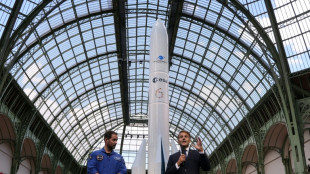 Macron urges Europe to develop 'crewed spaceflight' programme
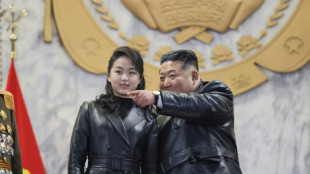
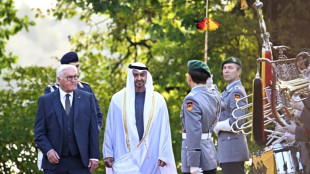 Deals worth billions to be signed as UAE leader visits Germany
 Zamanat Targets GCC’s $250 Billion SME Financing Gap With Up to $100 Million Tokenized Private Credit Fund

 Sri Lanka court revokes monk's pardon, orders return to prison
 'Hopeless, stuck, afraid': US deportees in limbo in Cameroon

 Mount Fuji ends hiking season with landslide, two rescues

 Seahawks beat Patriots again in NFL opener
With temperatures hitting 45C in Mecca this week, Saudi health workers have increasingly relied on drones to supply a vast array of medical clinics treating heat-stressed pilgrims during the hajj.
The rituals at the hajj have been a constant for centuries.
But technology is rapidly changing the experience for pilgrims and officials alike -- with AI, UAVs and mobile apps providing crucial services, logistical support and helping manage the mammoth crowds.
Rather than relying on congested roads filled with over 1.5 million pilgrims, drones in particular have proven to be a technological remedy for helping keep the 127 clinics spread across Mecca, Mina and Arafat adequately provisioned.
"The main goal is to provide fast service to the guests of God during the season," Fahd Al-Bathi, the chief operating officer at the National Unified Procurement Company (NUPCO), told AFP.
Preparations for the medical needs of the hajj season began nine months ago.
Standing before a colour-coded map of medical centres dotting the area, the NUPCO operations officer Turki Al-Obaidi said his teams work around the clock during the hajj.
"Our teams must ensure we reach patients as quickly as possible. This is a crucial factor with these extremely large crowds," he added.
Before the adoption of drones, drivers could spend over an hour en route to clinics running low on supplies.
Now, authorities have centralised operations around a sprawling centre that supplies drones with medications and other necessities.
"We are seeking to integrate new innovations through which we can ensure that medical supplies arrive safely, as quickly as possible, and with the highest quality," said Bathi.
In the operations room -- equipped with a giant data screen -- staff carefully track drone deliveries, while other employees use electric scooters to get around faster.
Drones are part of a growing arsenal of technology-led solutions aiming to better manage the hajj and the challenges presented by the searing desert climate.
Artificial intelligence has been deployed to help monitor the footage from thousands of cameras in and around the holy city of Mecca.
The new solutions help supplement more traditional methods to manage the heat, which include giant fans, trucks distributing free water and mist systems that help cool crowds.
"Heat exhaustion is one of the main issues" during the hajj, said Saudi health official Jamil Abu Al-Aynayn.
"We maintain a high and rapid level of readiness."
K.Hassan--SF-PST