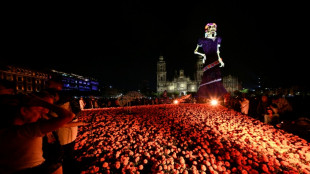
Exiled cartoonists give voice to Iran's silenced millions / Photo: JOHN THYS - AFP

 Hammers boss Nuno under pressure after West Brom loss

 'Trump betrayed us': Arizona's Latino voters sour on president
 Fresh anti-government protest flares in Albania's capital
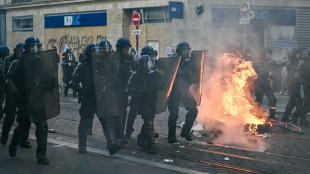 Clashes break out as hundreds of thousands protest in France

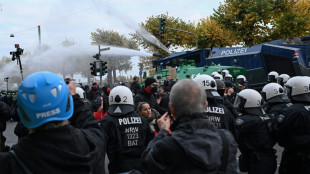 German police fire water cannon during tense 'Gen Z' protests
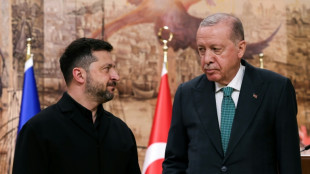
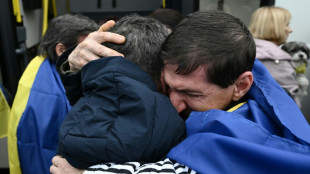 Forced to eat grass, Oleshky evacuees say truce was a 'blessing'

 UK police arrest Palestine Action supporters ahead of Supreme Court hearing
 Harmer and Rabada wrap up South Africa series win over Australia
 Senegal kicks off Youth Games, Africa's first ever Olympics
 Russia says responding to US report of planned attack on Moscow
 Carrick expects Man Utd stay despite Chelsea defeat

 China state TV does not air first La Liga games since Mbappe furore

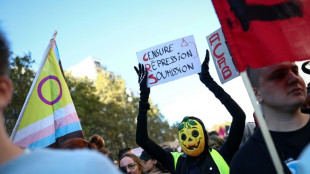 Thousands turn up for France protests amid tight security
 Our part of Mbappe, China issue over: Real Madrid's Mourinho
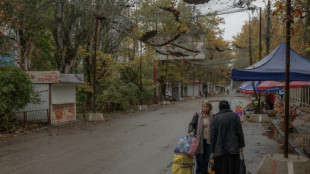 Evacuees from Russian-occupied Oleshky arrive in Ukraine

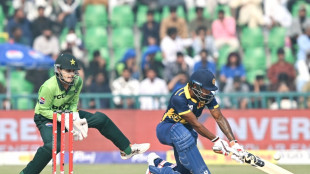 Kamindu hits maiden ODI ton as Sri Lanka set Pakistan 326 in final
 Aston Villa to take legal action against pundit Carragher
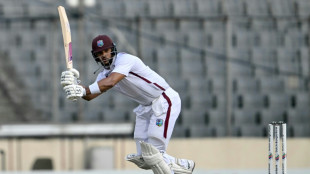 West Indies crush Bangladesh by eight wickets in first Test
 France on alert as Halloween protests raise risk of violence

 Abhishek Sharma: Indian cricket's 'new-generation superstar'

 Marquez stretches MotoGP championship lead after Martin pulls out

 الشارقة الإسلامي يدرج صكوكاً بقيمة 500 مليون دولار في ناسداك دبي
 جاسيندا أرديرن تدرّس القيادة القائمة على التعاطف في جامعة سيدني
 In-form Fernandez reaches Tokyo final

 رأس الخيمة تطلق إطار التنقل الذاتي ومنطقة لتجارب المركبات

Exiled Iranian cartoonist Mana Neyestani has a huge following back home for his biting humour.
And one of his recent sketches sums up the "dilemma created by the regime" over the US-Israel bombing of his homeland and how it divides Iranians.
Two men hold a banner with the words "No to war". But one is in a balaclava and is also holding a gallows with a man hanging from it.
"It's difficult to work right now," said the Paris-based artist. "You either get labelled as a lover of the war or of the Islamic Republic."
Three exiled Iranian cartoonists who talked to AFP said they were walking the same thin line, with Sanaz Bagheri -- who has been working from Amsterdam for the last seven years -- insisting that they "are doing everything we can to be the voice" of those who cannot speak back home.
Artists have used satire throughout Iran's turbulent history to circumvent the threat of persecution.
- Khamenei and women -
Another of Neyestani's drawings -- taking a dig at Tehran's internet ban -- shows Iranian Foreign Minister Abbas Araghchi sitting on the head of a man tied up below a no WIFI sign while declaring, "I am the voice of Iranians."
"Social media is the only way I can communicate with my audience," said the 52-year-old cartoonist, who has close to a million followers on Instagram alone.
"It's one of the only ways people inside Iran can stay informed. All official news sources inside Iran only present the government's narrative."
But that audience is now effectively cut-off by a near total internet shutdown since the start of the war in February, keeping roughly 90 million Iranians in digital darkness.
In a central Paris gallery a selection of Neyestani's works currently hangs alongside another award-winning Iranian cartoonist, Kianoush Ramezani, who works from exile in Helsinki.
Supreme Leader Ayatollah Khamenei, killed on February 28 at the start of the US-Israel bombing, is a frequent target of their satire.
Women feature prominently, inspired by the "Women, Life, Freedom" demonstrators sparked by the death of Mahsa Amini in state custody in 2022.
Sketches include a woman with long flowing hair standing on Khamenei's burning turban, while another shows hijab-less schoolgirls ripping his portrait from their classroom wall.
"This system is built on sanctifying the supreme leader and other figures within it. They have invested enormous effort and resources to construct this sense of sanctity, and a simple cartoon can undermine it," Ramezani said.
- 'Dangerous' -
"Iranians are sarcastic and are good with humour, but they take political cartoons extremely seriously and that is a problem for us because when they take it too seriously," he said. "Then it becomes dangerous for us."
After periods of repression under the Shah's feared Savvak intelligence services in the 1970s, and the "sacred defence" era declared by the Islamic authorities during the Iran-Iraq war in the 1980s, satire enjoyed a brief respite with a proliferation of reformist newspapers in the 1990s.
But the election of hardliner Mahmoud Ahmadinejad in 2005 turned the tide, with a wave of cartoonists leaving the country after mass protests against Ahmadinejad in 2009, and again with the crackdown on the Women, Life, Freedom Movement.
- Nightmare -
In a tale of Kafkaesque irony, it was a cockroach that drove Neyestani into exile in 2006.
An award-winning author of eight works, he told the story of his nightmarish fall from grace in a graphic novel, "An Iranian Metamorphosis", including his time in Tehran's notorious Evin prison over a cartoon of a young boy talking to a cockroach.
Interpreted as a slur to the Iranian Azeri community, from which Neyestani ironically hails, the drawing sparked massive riots and forced him to leave the country.
Picking up a pen has gotten no less riskier since.
Ramezani feels the threat of Tehran's long arm 4,000 kilometres (2,500 miles) away from his hometown of Rasht on the Caspian Sea.
"They spend a lot of money to make this kind of cyber army and they systematically attack you, harass you," he said, reporting cartoonists to social media platforms, claiming their content was insulting or inappropriate.
It is designed to put you in "a shadow ban to decrease your visibility," he said.
ja/dp/fg
A.Suleiman--SF-PST