New push in Europe to curb children's social media use / Photo: Antonin UTZ - AFP/File

 Macron, Carney to visit French islands after Trump's map post
 حمزة قورقماز يناقش العلاقة بين وضوح المبادئ واحترام الاختلاف

 اليورو يستقر في البنوك المصرية وأعلى سعر للبيع 59.85 جنيه

 Myanmar says UN envoy illegitimate ahead of credentials decision

 Philippine rescuers pull more victims from charred ferry

 ستاندرد آند بورز تثبت تصنيف السعودية عند A+

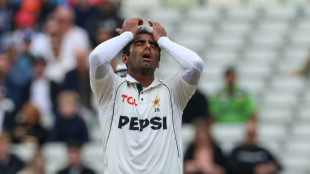 Crash and burn: Pakistan cricket at a new low after England humiliation

 'Second life': Nepal tunnel survivor recalls ordeal

 Hong Kong homes flattened for US$28 bn high-tech hub
 'Be careful what you wish for': 'Obsession' director and star reflect on success
 Messi scores but Miami held by Nashville

 US Open champ Rybakina on top of world after injury scare

 Rybakina reigns serene as new world number one

 South Africa defeat New Zealand 43-28 to complete 3-1 series victory

 Rybakina triumphs in US Open, denies Sabalenka three-peat

 Akron fan's honorary play-calling stint ends with opening-drive fumble

 Louisiana's developing roster faces USC as Trojans enter as heavy favorites

 Christa Pike seeks clemency before September 30 execution in Tennessee

 Utah hosts Arkansas as both programs begin seasons under new coaches

 Maryland groups seek statewide data center pause after local moratoriums spread

 Winston County trash-debt prosecutions face challenge from civil-rights lawyers

 Fifth Circuit upholds dismissal of Jackson residents' constitutional water claims

 Anthropic details Claude misuse as US targets major illicit online marketplace

 Japanese floating parking platform is designed to lift cars above floodwater

 Arteta blasts 'unacceptable' Sunderland penalty despite Arsenal win

From dangerous diet tips to disinformation, cyberbullying to hate speech, the glut of online content harmful to children grows every day. But several European countries have had enough and agree the EU should do more to prevent minors' access to social media.
The European Union already has some of the world's most stringent digital rules to rein in Big Tech, with multiple probes ongoing into how platforms protect children -- or fail to do so.
Backed by France and Spain, Greece spearheaded a proposal for how the EU should limit children's use of online platforms as a rising body of evidence shows the negative effects of social media on children's mental and physical health.
They discussed the plan Friday with EU counterparts in Luxembourg to push the idea of setting an age of digital adulthood across the 27-country bloc, meaning children would not be able to access social media without parental consent.
France, Greece and Denmark believe there should be a ban on social media for under-15s, while Spain has suggested a ban for under-16s.
Australia has banned social media for under-16s, taking effect later this year, while New Zealand and Norway are considering a similar prohibition.
After the day's talks in Luxembourg, it appeared there was no real appetite at this stage for an EU-wide ban on children under a specific age.
But Danish Digital Minister Caroline Stage Olsen indicated there would be no let-up. "It's going to be something we're pushing for," she said.
Top EU digital official Henna Virkkunen admitted specific age limits would be "challenging" for multiple reasons, including cultural differences in member states and how it would work in practice.
But the European Commission, the EU's digital watchdog, still intends to launch an age-verification app next month, insisting it can be done without disclosing personal details.
- 'Very big step' -
The EU last month published non-binding draft guidelines for platforms to protect minors, to be finalised once a public consultation ends this month, including setting children's accounts to private by default, and making it easier to block and mute users.
French Digital Minister Clara Chappaz said it would be "a very big step" if the EU made platforms check the real age of their users, as theoretically required under current regulation.
The worry is that children as young as seven or eight can easily create an account on social media platforms despite a minimum age of 13, by giving a false date of birth.
"If we all agree as Europeans to say this needs to stop, there needs to be a proper age verification scheme, then it means that children below 13 won't be able to access the platform," Chappaz said.
France has led the way in cracking down on platforms, passing a 2023 law requiring them to obtain parental consent for users under the age of 15.
But the measure has not received the EU green light it needs to come into force.
France also gradually introduced requirements this year for all adult websites to have users confirm their age to prevent children accessing porn -- with three major platforms going dark this week in anger over the move.
TikTok, also under pressure from the French government, on Sunday banned the "#SkinnyTok" hashtag, part of a trend promoting extreme thinness on the platform.
- In-built age verification -
France, Greece and Spain expressed concern about the algorithmic design of digital platforms increasing children's exposure to addictive and harmful content -- with the risk of worsening anxiety, depression and self-esteem issues.
Their proposal -- also supported by Cyprus and Slovenia -- blames excessive screen time at a young age for hindering the development of minors' critical and relationship skills.
They demand "an EU-wide application that supports parental control mechanisms, allows for proper age verification and limits the use of certain applications by minors".
The goal would be for devices such as smartphones to have in-built age verification.
The EU is clamping down in other ways as well.
It is currently investigating Meta's Facebook and Instagram, and TikTok under its mammoth content moderation law, the Digital Services Act (DSA), fearing the platforms are failing to do enough to prevent children accessing harmful content.
And last week, it launched an investigation into four pornographic platforms over suspicions they are failing to stop children accessing adult content.
C.Hamad--SF-PST