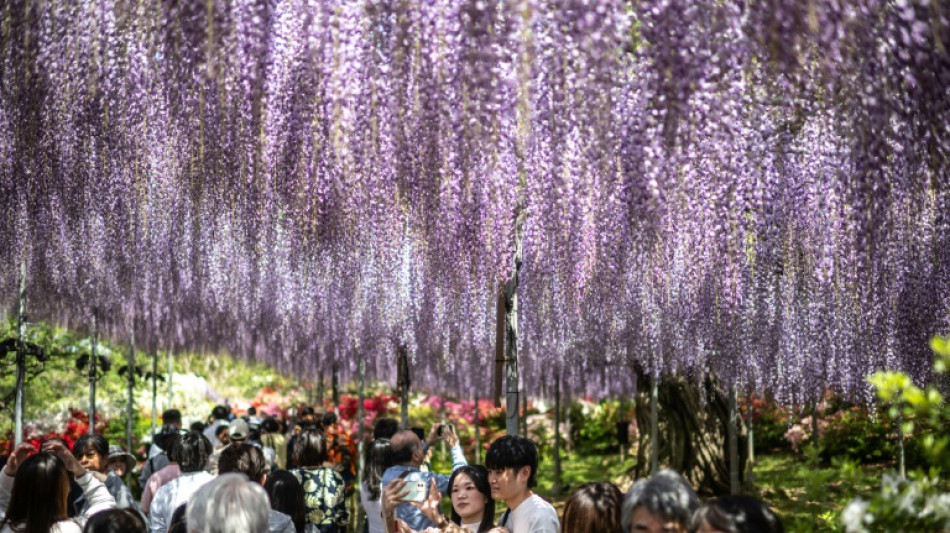
Inflation, hotel prices curtail Japanese 'Golden Week' travels / Photo: Philip FONG - AFP/File

 Indian crude-sensitive shares gain after 13% oil-price decline

 رينو 5 الكهربائية: اختبار مدى 1000 كيلومتر من نيس إلى باريس

 Abdul El-Sayed declares victory in Michigan Senate contest

 Democrats capture US Congress in sweeping midterm victory

 Manchester United rallies past Roma as PSG dominates in Champions League

 Qatar prime minister advances mediation through diplomatic calls

 Greenland parliament approves security agreement with United States

 Qatar envoy meets incoming UN General Assembly president

 Trump Signals Willingness to Work With Democrats After Midterm Defeat

 دي برومهد يفتح خياراته لـ "ذا بيغ ويسترنر" قبل عودته في ويكسفورد

Japan's annual "Golden Week" holiday period gets into full swing Saturday, but inflation and hotel prices sent soaring by record inbound tourism have left domestic travellers less eager to pack their bags.
Traditionally, Golden Week -- which includes three consecutive public holidays -- gives Japanese workers one of their longest breaks in the year, with many taking the opportunity to see other parts of Japan or to travel abroad.
But this year consumers in the world's fourth-largest economy are feeling the pain of rising prices for everything from cabbage and rice to electricity bills.
The Japanese yen has lost around a third of its value since 2022, one factor behind the record number of foreign tourists also lured by the country's numerous attractions from Mount Fuji's majestic slopes to shrines and sushi bars.
The inflow of tourists has sent demand for hotel bookings spiralling upward, with the room rate in Japan's five major cities around 16 percent more expensive at the onset of this year's Golden Week than last year, according to a survey from the business daily Nikkei.
All this has translated into a tepid desire among Japanese residents to travel for this year's Golden Week, surveys have shown. The latter part of the holiday period began Saturday and lasts until Tuesday.
"The biggest reason seems to be the inflation that has curtailed their willingness to spend lavishly", Atsushi Tanaka, a tourism studies professor at Yamanashi University, told AFP.
"Because the inbound tourism is booming so much, hotel operators don't need to lower their accommodation prices, which is making it harder for Japanese people to travel," Tanaka added.
- 'Financial burdens' -
A poll by major travel agency JTB showed last month that 20.9 percent of its respondents will or "probably" will go on a trip during Golden Week, down 5.6 percent from last year.
Another survey by marketing research firm Intage similarly found last month that the percentage of those planning to travel domestically during the holiday period dipped by two percent from a year earlier to 13.6 percent.
While factors like a desire to avoid crowds are also at play, "the tendency to refrain from going out due to financial burdens" seems to be growing, Intage said.
When it comes to travelling abroad, that is verging on being an "unattainable luxury", it said.
The same study, however, showed the average budget for Golden Week outings this year has edged up to $201 from $192, underscoring holidaymakers' acceptance of the status quo.
"It shows they are resigned to the fact that it just costs them more this year to do anything," Intage's Motohiro Shimogawara told AFP.
Japan logged more than 36.8 million tourist arrivals in 2024, topping 2019's record of nearly 32 million.
The government has set an ambitious target of almost doubling tourist numbers to 60 million annually by 2030.
But as in other global tourist magnets like Venice in Italy, there has been growing pushback from residents against overtourism.
Residents and authorities in Japanese tourist hotspots, from tradition-steeped Kyoto to towns near the majestic Mount Fuji, are increasingly voicing frustration about overcrowding, traffic violations and bad behaviour by some visitors.
W.Mansour--SF-PST