Myanmar marks month of misery since historic quake / Photo: Sai Aung MAIN - AFP

 Indian crude-sensitive shares gain after 13% oil-price decline

 رينو 5 الكهربائية: اختبار مدى 1000 كيلومتر من نيس إلى باريس

 Abdul El-Sayed declares victory in Michigan Senate contest

 Democrats capture US Congress in sweeping midterm victory

 Manchester United rallies past Roma as PSG dominates in Champions League

 Qatar prime minister advances mediation through diplomatic calls

 Greenland parliament approves security agreement with United States

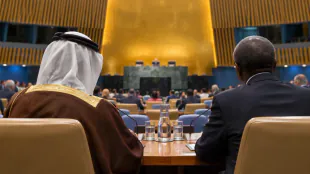 Qatar envoy meets incoming UN General Assembly president

 Trump Signals Willingness to Work With Democrats After Midterm Defeat

 دي برومهد يفتح خياراته لـ "ذا بيغ ويسترنر" قبل عودته في ويكسفورد

Myanmar marked one month since suffering its fiercest earthquake in more than a century on Monday, with military bombardments unabated despite a humanitarian truce as thousands of survivors camp in makeshift shelters.
The magnitude-7.7 tremor was the strongest with an epicentre on Myanmar's land mass since 1912, the United States Geological Survey reported, killing nearly 3,800 according to an official toll still rising daily.
Devastation centred on the second most populous city of Mandalay where apartments, tea shops, hotels and religious institutes were razed or heavily damaged.
"It's been a month but we are still very busy trying to get back what we lost," said one Mandalay resident who asked to remain anonymous.
"I am not the only one still in difficulty, it's everyone around me as well."
With tens of thousands people still homeless as monsoon season approaches, aid agencies are warning of major challenges to come.
"People are extremely concerned about what will happen in the next few weeks," the International Federation of Red Cross and Red Crescent Societies (IFRC) Myanmar chief Nadia Khoury told AFP.
Meanwhile she said the organisation was planning a two-year relief plan because "the geographical magnitude of this earthquake has been absolutely huge".
- Air strikes go on -
The military -- which sparked a civil war by snatching power in a 2021 coup -- declared a ceasefire to spur relief efforts starting on April 2.
But since then monitors from the Britain-based Centre for Information Resilience have logged 65 air attacks by the junta.
A strike on Wednesday killed five people and wounded eight more in a village on the outskirts of the town of Tabayin, residents told AFP, 100 kilometres (62 miles) northwest of the earthquake's epicentre.
"I managed to hide immediately after I heard explosions but my elder sister couldn't," said 40-year-old Ko Aung.
"She ran randomly in a panic during the strike and a piece of shrapnel hit her head. She died on the spot."
Cho Tint, 46, said she sheltered in a cow shed as a fighter jet dropped two bombs.
"The military announced a ceasefire for the quake but they broke it already and are still attacking civilians," she said. "That's them crossing the line."
In eastern Myanmar residents also said they were forced from their homes in an offensive by opposition armed groups attempting to seize towns on a lucrative trade route to Thailand during the truce, due to last until Wednesday.
After four years of war, half the population were already living in poverty and 3.5 million were displaced before the quake, which sheared the ground up to six metres (20 feet) in places according to NASA analysis.
Khoury said some of the badly-hit regions already had a high level of humanitarian need because they were hosting people displaced by fighting.
"Now it's become even higher with this earthquake," she said.
Ahead of the tremor the nation of more than 50 million was also bracing for the impact of international aid cuts following US President Donald Trump's campaign to slash Washington's humanitarian budget.
The World Food Programme had said it would cut off one million from vital food aid starting in April as a result of "critical funding shortfalls".
P.Tamimi--SF-PST