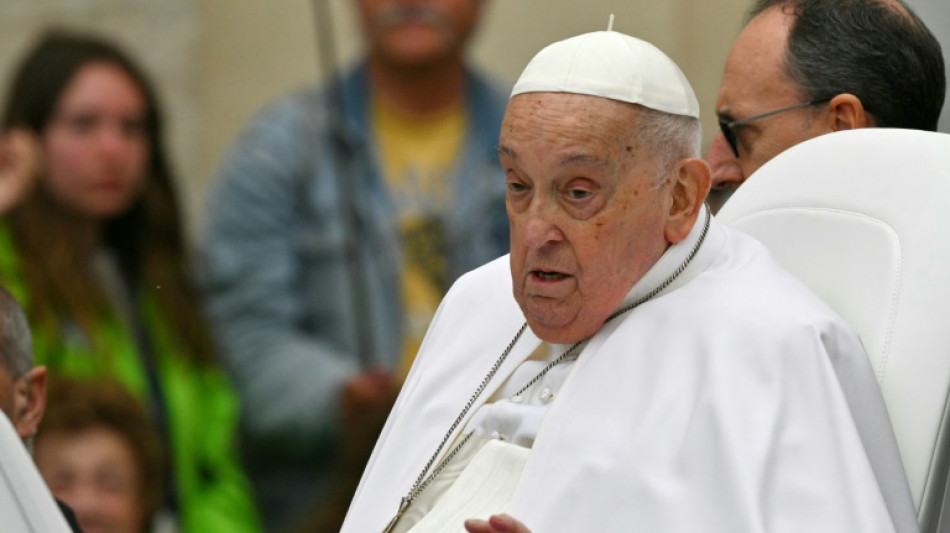
Pope's death triggers surge of disinformation he fought against / Photo: Andreas SOLARO - AFP/File

 Equitas Small Finance Bank rebounds after naming interim chief executive

 اعتقال مواطن ألباني في إيطاليا لانتهاكه حظر الترحيل

 Indian crude-sensitive shares gain after 13% oil-price decline

 رينو 5 الكهربائية: اختبار مدى 1000 كيلومتر من نيس إلى باريس

 Abdul El-Sayed declares victory in Michigan Senate contest

 Democrats capture US Congress in sweeping midterm victory

 Manchester United rallies past Roma as PSG dominates in Champions League

 Qatar prime minister advances mediation through diplomatic calls

 Greenland parliament approves security agreement with United States

 Qatar envoy meets incoming UN General Assembly president

 Trump Signals Willingness to Work With Democrats After Midterm Defeat

 دي برومهد يفتح خياراته لـ "ذا بيغ ويسترنر" قبل عودته في ويكسفورد

The death of Pope Francis drew tributes from mourners around the world -- and with them a wave of disinformation, old and new.
Swarms of fake and misleading content interrupted the global rush of condolences that poured online for the 88-year-old Argentine reformer ahead of his funeral Saturday.
The outcome was in some ways par for the course for the 12-year head of the Catholic Church, who spoke out fiercely against disinformation but was also a frequent subject of it.
"The tragedy of disinformation is that it discredits others, presenting them as enemies, to the point of demonizing them and fomenting conflict," Pope Francis wrote in a 2018 message for World Communications Day. He likened modern-day "fake news" to the "snake-tactics" employed by the serpent in the Christian origin story described in the Bible.
"There is no such thing as harmless disinformation," he argued. "Even a seemingly slight distortion of the truth can have dangerous effects."
Two years earlier, the pope had found himself an unwilling yet central character in one of the most prominent lies of the 2016 US presidential election, when a hoax saying he endorsed Donald Trump exploded online. The false story garnered the most engagement on Facebook of any election story in the three months before the vote, BuzzFeed News reported at the time.
Several of the falsehoods that trailed his death appeared similarly aimed at misrepresenting his actions and connections.
One widespread video appeared to show him swatting the hand of President Trump, whose deportation policies the pontiff had denounced. The clip was manipulated, however, and had originally aired as a joke on a comedian's late-night TV show.
Another video, claiming to show Satanic rituals on display at the pope's funeral, turned out to be unrelated footage from Spain.
In a third case, a photo of the pope meeting Holocaust survivors in 2014 was misrepresented as evidence that he was beholden to the wealthy Rothschild family, a favorite target of anti-Semitic conspiracy theories.
- 'Content follows attention' -
The rash of disinformation underscores how bad actors seeking to farm engagement or push targeted narratives work to exploit the buzz around major events.
Similar campaigns followed the deaths of other public figures such as Queen Elizabeth II, whose passing in 2022 inspired false claims about vaccines and pedophilia.
"In general, content follows attention," digital literacy expert Mike Caulfield, the author of a book about verifying information online, told AFP.
"When someone dies, as morbid as it seems, people run to where the spotlight is and try to put on their show," Caulfield said. "For some people it's a chance to promote an agenda, and they connect the event or the figure to whatever political cause or conspiracy theory they generally promote. For others, it's just about the money, the trolling or the attention."
Numerous images generated by artificial intelligence -- including an AI creation of Pope Francis draped in a rainbow LGBTQ Pride flag, and the now-infamous depiction of him wearing a white puffer coat that became an internet sensation in 2023 -- also resurfaced after his death.
They were joined by new fakes spread in multiple languages, one of which portrayed the pope's body in an open casket.
Some AI-enabled images circulated alongside malicious links that led to scams or fraudulent websites, according to research from Check Point, a cybersecurity company.
The pope cautioned against such deception in January, saying AI technologies "can be misused to manipulate minds."
The message became one of his final warnings about disinformation.
Y.Zaher--SF-PST